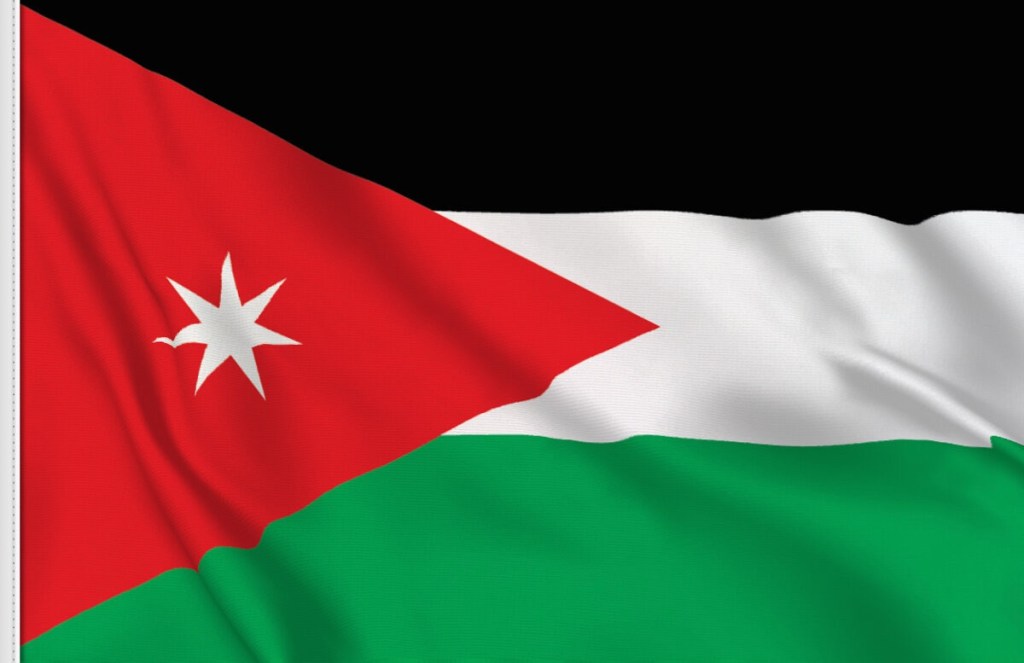
Official Name: Hashemite Kingdom of Jordan
Established: 11 April 1921 (Emirate) / 25 May 1946 (Independence from United Kingdom)
Population: 11,484,805 (2035 estimate)
Country Size: 89,342 square kms
Religion: 95% Islam (official religion), 3% Christian
Language: Arabic
Currency: Jordanian dinar
Capital: Amman
Order of Visit: Ninety Second
First Visit: 24 November 2024 (planned)
Last Visit: 04 December 2024 (planned)
Duration: 11 Days
Expected Highlights: Exploring historical Petra site, visiting Dead Sea, Sleeping under the stars
Cities: Amman, Wādī Mūsá, Petra, Wadi Rum
Jordan Journal Entry
First Published 01 June 2026 | Updated
Location and Geography
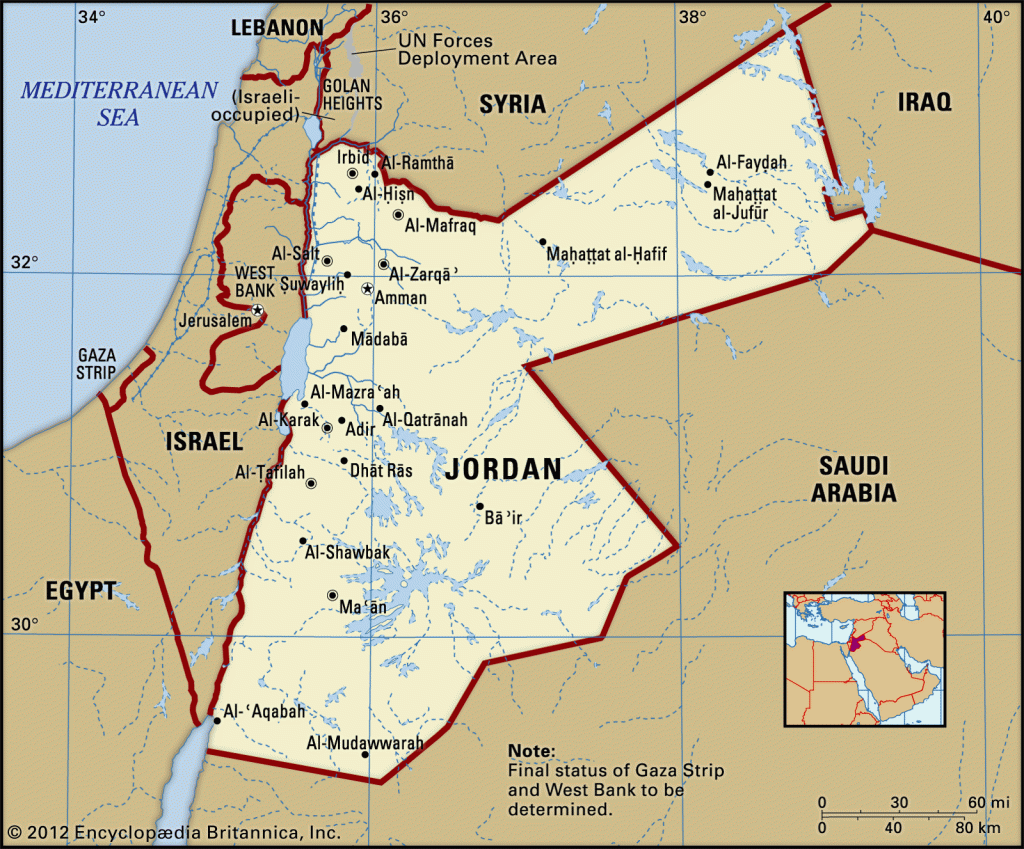
Jordan is a country located in West Asia. Jordan is bordered by Syria to the north, Iraq to the east, Saudi Arabia to the south, and both Israel and Palestine (West Bank) to the west. The Jordan River, flowing into the Dead Sea, is located along the country’s western border within the Jordan Rift Valley. Jordan has a coastline along the Red Sea in its southwest, separated by the Gulf of Aqaba from Egypt.
The highlands above the Jordan Valley, mountains of the Dead Sea and Wadi Araba have a Mediterranean climate, while the eastern and north-eastern areas of the country are arid desert. Jordan with a population of approximately 11.5 million makes it the eleventh-most populous Arab country.
History and Culture
The oldest known evidence of hominid habitation in Jordan dates back at least 200,000 years. Scientists have found the world’s oldest known evidence of bread-making at a 14,500-year-old Natufian site in Jordan’s north-eastern desert.
During the Neolithic period (10,000–4,500 BC), there was a transition there from a hunter-gatherer culture to a culture with established populous agricultural villages. Fortified towns and urban centres first emerged in the southern Levant early in the Bronze Age (3600–1200 BC). Ancient Egyptian populations expanded towards the Levant and came to control both banks of the Jordan River.
During the Iron Age (1200–332 BC), after the withdrawal of the Egyptians, Transjordan was home to the kingdoms of Ammon, Edom and Moab. Around 740–720 BC, the kingdoms of Ammon, Edom and Moab were subjugated by the Neo-Assyrian Empire. Then in 627 BC, following after the disintegration of the Assyrians’ empire, Babylonians took control of the area. The Roman rule began around 63 BC over the kingdoms of Ammon, Edom and Moab that lasted four centuries.
In 324 AD, the Roman Empire split and the Eastern Roman Empire, later known as the Byzantine Empire, continued to control or influence the region until 636. Byzantines however were defeated by the Muslims in 636 which led to a series of different Caliphates. In 1516 the Ottoman Caliphate’s forces conquered these territory.
Increasing policies of Turkification and centralisation adopted by the Ottoman Empire contributed to the development of an Arab nationalist movement. These changes led to the outbreak of the 1916 Arab Revolt during World War I, which ended four centuries of stagnation under Ottoman rule. Eventually what is now known as Jordan, then known as Transjordan, came under the British sphere of influence post WW1.
The Treaty of London, signed by the British government and the Emir of Transjordan on 22 March 1946, recognised the independence of the state. On 25 May 1946, the day that the treaty was ratified by the Transjordan parliament, Transjordan was raised to the status of a kingdom under the name of the Hashemite Kingdom of Jordan in Arabic, with Abdullah as its first king.
Jordan signed a military pact with Egypt just before Israel launched a pre-emptive strike on Egypt to begin the Six-Day War in June 1967, where Jordan and Syria joined the war. The Arab states were defeated, and Jordan lost control of the West Bank to Israel. Jordan renounced its claims to the West Bank in 1988. The Israel–Jordan peace treaty was signed on 26 October 1994.
What has drawn me to visit Jordan?
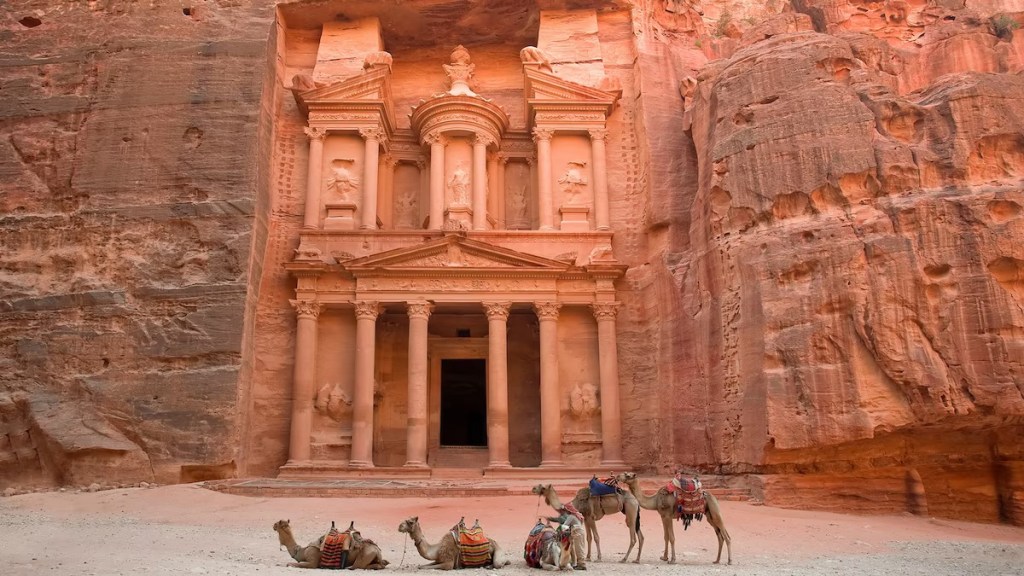
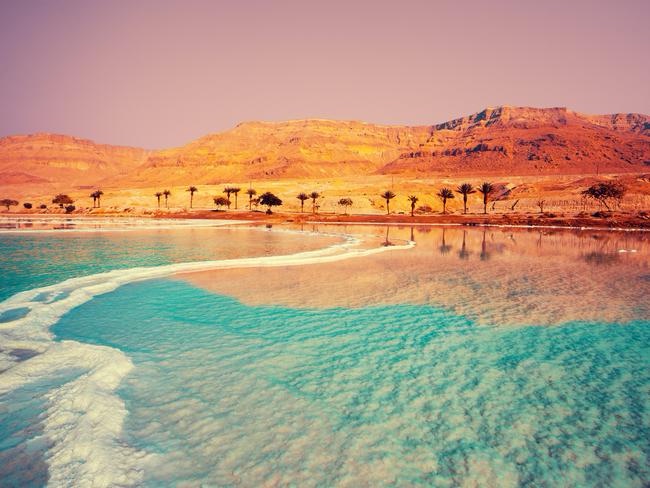
My entire 2026 world trip has at its centre a visit to historic site of Petra. The many ancient sites in Jordan are worth a visit, and experiencing the Dead Sea is a highlight but exploring Petra and learning about its people and history made a visit to Jordan, despite the issues with the region, makes this a must visit.


Leave a Reply