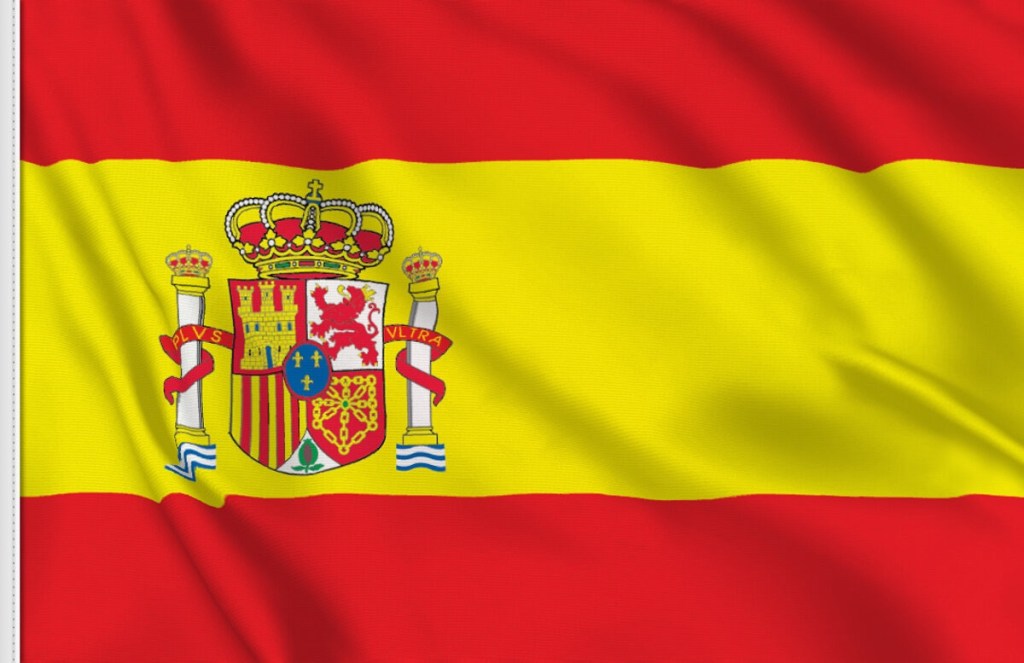
Official Name: Kingdom of Spain
Established: January 1479 (First constitution 19 March 1812)
Population: 47,431,256 (2020 estimate)
Religion: 61% Roman Catholic, 35% No religion
Language(s): Spanish
Capital: Madrid
Order of Visit: Twenty
First Visit: 28 June 2006
Last Visit: 26 October 2012
Duration: 12 Days
Times Visited: 2 (with future planned 2026 visit)
Next Planned Visit: 15 – 16 December 2026 and 22 – 23 December 2026
Visit Highlights:
Barcelona – Bustling Las Ramblas, Placa de Catalunya (beautiful fountain), Borri Gothic sector, tapas bars, flamenco dancing (2006).
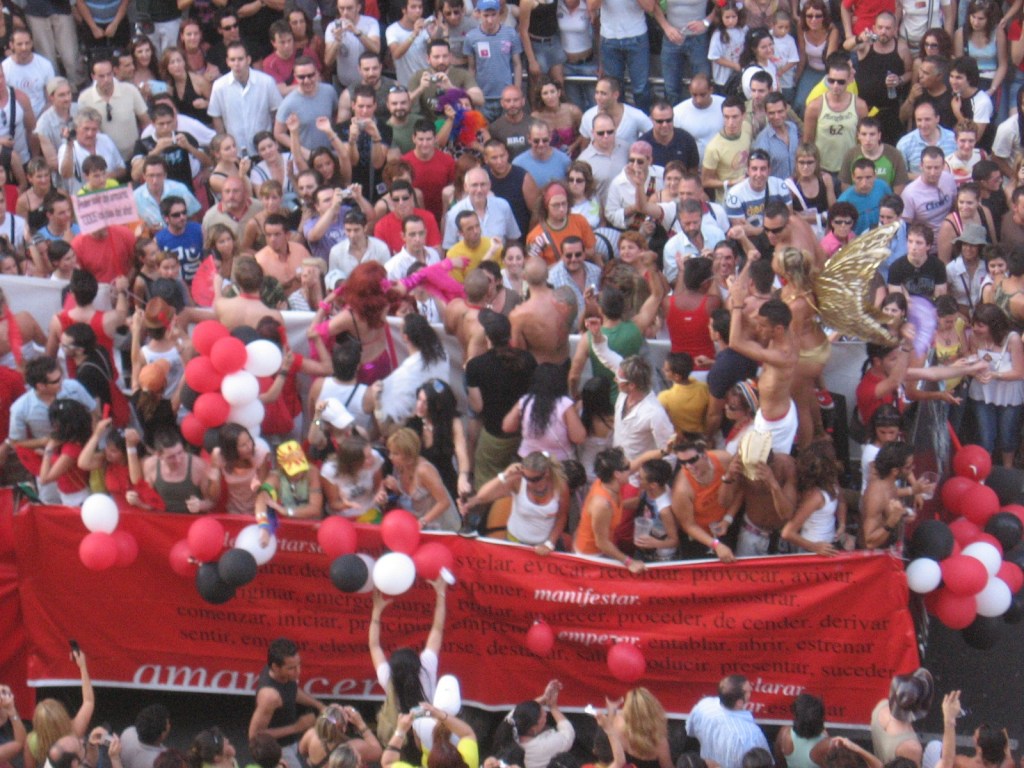
Madrid – The crazy Gay & Lesbian Mardi Gras, excellent Museo Nacional Del Prado, bullfighting, flamenco dancing (2012).Burgos – the amazing Cathedral.
San Sebastian – beautiful beaches and tapas bars.
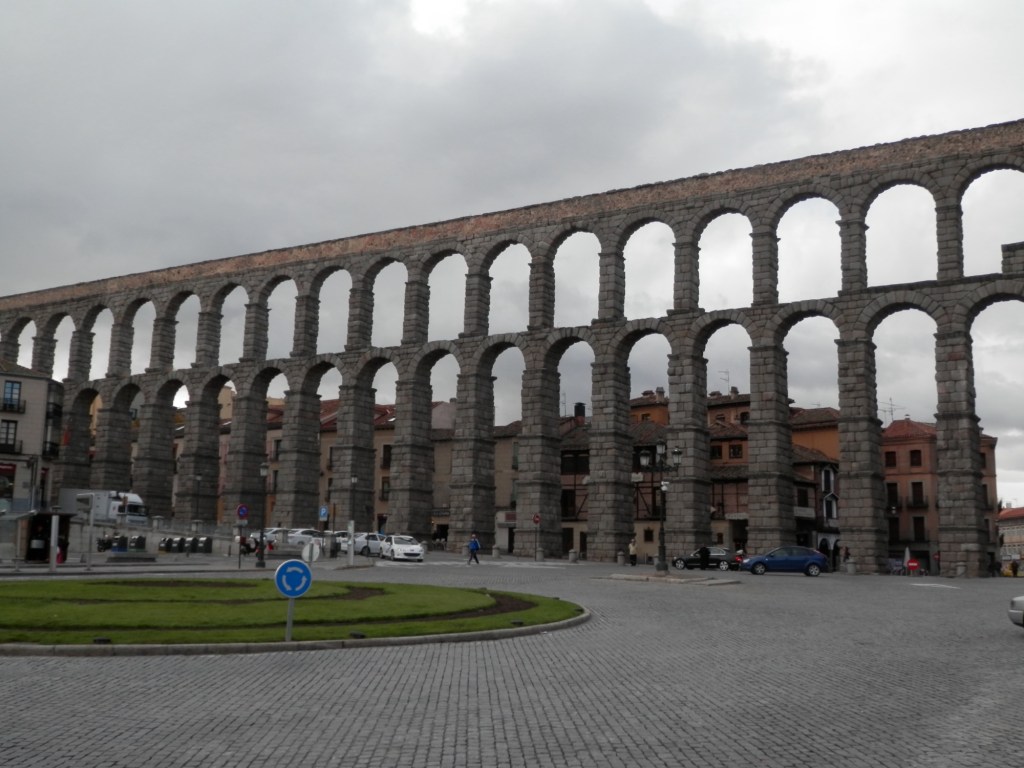
Segovia – Alcazar (castle), Cathedral, and ancient, magnificent Aqueduct.
Avila – the walled city.
Places Visited: Avila, Barcelona, Burgos, Madrid, San Sebastián, Segovia
Planned Places to Visit: Madrid, Seville
Spain Journal Entries
Published: 26 February 2010 | Last Update: 10 September 2026
History and Geography
Spain is a country in Southwestern Europe and is bordered to the south and east by the Mediterranean Sea; to the north and northeast by France, Andorra, and the Bay of Biscay; and to the west and northwest by Portugal and the Atlantic Ocean. Spain covers 505,990 square kilometres, making it the largest country in Southern Europe, the second-largest country in Western Europe, and the largest country in the European Union.
Modern humans first arrived in the Iberian Peninsula around 35,000 years ago. Iberian cultures, along with ancient Phoenician, Greek, Celtic, and Carthaginian settlements, developed on the peninsula until the region came under Roman rule around 200 BC, after which the region was named Hispania (Spain).
At the end of the Western Roman Empire, Germanic tribal confederations migrated from Central Europe, invaded the Iberian Peninsula, and established relatively independent realms in its western provinces. One of them, the Visigoths, forcibly integrated all remaining independent territories in the peninsula, including the Byzantine province of Spania, into the Visigothic Kingdom.
In the early eighth century, the Visigothic Kingdom was conquered by the Umayyad Islamic Caliphate. The Muslim rule in the Iberian Peninsula soon became autonomous from Baghdad.
Eventually, over seven centuries, a re-emergence of the Christian kingdoms of León, Castile, Aragon, Portugal and Navarre occurred, pushing out Muslim rule, with the last Muslim territory, the Nasrid Kingdom of Granada, ceasing to exist in 1492.
A process of political consolidation among the Christian kingdoms also ensued, and the late 15th century saw the dynastic union of Castile and Aragon under the Catholic Monarchs, sometimes considered the emergence of Spain as a unified country.
Through exploration and conquest, or through royal marriage alliances and inheritance, the Spanish Empire expanded to include vast areas in the Americas, islands in the Asia-Pacific region, parts of Italy, cities in North Africa, as well as parts of what are now France, Germany, Belgium, Luxembourg, and the Netherlands. Spain completed the first circumnavigation of the world between 1519 and 1521. It was the first empire for which it was said that the sun never set. Spain ruled one of the largest empires in history, which is why Spanish is such a worldwide language.
The Protestant Reformation dragged the kingdom into religiously charged wars. The result was a country forced into ever-expanding military efforts across Europe and in the Mediterranean. By the middle decades of a war- and plague-ridden 17th-century Europe.
In the latter half of the 17th century, Spain entered a gradual decline, during which it ceded several small territories to France and England; however, it maintained and expanded its vast overseas empire, which remained intact until the beginning of the 19th century.
A true Spanish state was established when the first Bourbon king, Philip V, united the crowns of Castile and Aragon into a single state, abolishing many of the old regional privileges and laws.
In 1793, Spain went to war against the revolutionary new French Republic as a member of the first Coalition. The subsequent War of the Pyrenees polarised the country in a reaction against the gallicised elites, and following defeat in the field, peace was made with France in 1795.
Spain switched sides and allied with France in the brief War of the Third Coalition against Napoleon, which ended with the British naval victory at the Battle of Trafalgar in 1805. In 1807, a secret treaty between Napoleon and the unpopular prime minister led to a new declaration of war against Britain and Portugal. Napoleon’s troops entered the country to invade Portugal but instead occupied Spain’s major fortresses. The Spanish king abdicated in favour of Napoleon’s brother, Joseph Bonaparte.
Joseph Bonaparte was seen as a puppet monarch and was regarded with scorn by the Spanish. The 2 May 1808 revolt was one of many nationalist uprisings across the country against the Bonapartist regime. These revolts marked the beginning of a devastating war of independence against the Napoleonic regime. Following Napoleon’s disastrous invasion of Russia, the French imperial armies were ousted from Spain in 1814, and King Ferdinand VII returned to the throne.
In 1812, a constitution for universal representation under a constitutional monarchy was declared, but after the fall of the Bonapartist regime, Ferdinand VII disregarded it and ruled as an absolute monarch.
Starting in 1809, Spain’s American colonies began a series of revolutions. They declared independence, leading to the Spanish-American War of Independence, which ended Spanish control over its mainland colonies in the Americas. King Ferdinand VII’s attempt to reassert control proved futile as he faced opposition not only in the colonies but also in Spain. By the end of 1826, the only American colonies Spain held were Cuba and Puerto Rico.
Spain remained neutral during World War 1. In 1931, the king left the country, and the Republic was proclaimed on 14 April 1931. A constitution for the country was passed in October 1931.
The Spanish Civil War broke out in 1936: on 17 and 18 July, part of the military carried out a coup d’état that succeeded only in parts of the country. The situation led to a civil war, in which the territory was divided into two zones: one under the authority of the Republican government, which counted on outside support from the Soviet Union and Mexico, and the other controlled by the putschists (the Nationalist or rebel faction), supported by Nazi Germany and Fascist Italy. The Western powers did not support the Republic due to the British-led policy of non-intervention. General Francisco Franco was sworn in as the supreme leader of the rebels on 1 October 1936.
The war claimed the lives of over 500,000 people and caused the flight of up to half a million citizens from the country. On 1 April 1939, five months before the beginning of World War II, the rebel side led by Franco emerged victorious, imposing a dictatorship over the whole country.
The Franco regime remained chiefly “neutral” in a nominal sense during the Second World War. However, it was sympathetic to the Axis and provided the Nazi Wehrmacht with Spanish volunteers on the Eastern Front.
After World War II, Spain was politically and economically isolated and was kept out of the United Nations. This changed in 1955, during the Cold War, when it became strategically important for the US to establish a military presence on the Iberian Peninsula as a counter to any possible Soviet move into the Mediterranean basin. In the 1960s, Spain registered an unprecedented rate of economic growth, propelled by industrialisation, mass internal migration from rural areas to Madrid, Barcelona, and the Basque Country, and the creation of a mass tourism industry. Franco’s rule was also characterised by authoritarianism, promotion of a unitary national identity, National Catholicism, and discriminatory language policies.
With Franco’s death in November 1975, Juan Carlos succeeded to the position of King of Spain and head of state in accordance with the franquist law. With the approval of the new Spanish Constitution of 1978 and the restoration of democracy, the State devolved much authority to the regions and created an internal organisation based on autonomous communities. The Spanish 1977 Amnesty Law allowed people of Franco’s regime to continue working in institutions without consequences.
During the 1980s, the democratic restoration made possible the growth of an open society. On 30 May 1982, Spain joined NATO, following a referendum amid strong social opposition. That year the Spanish Socialist Workers Party (PSOE) came to power, the first left-wing government in 43 years. In 1986 Spain joined the European Economic Community, which later became the European Union. On 1 January 2002, Spain fully adopted the euro. In 2005, the Spanish government legalised same sex marriage.
A Catalan independence referendum was held on 1 October 2017, and on 27 October the Catalan parliament voted to declare independence from Spain to form a Catalan Republic unilaterally. On the same day, the Spanish Senate was discussing the approval of direct rule over Catalonia, as called for by the Spanish Prime Minister. Later that day, the Senate granted the power to impose direct rule, and Mr Rajoy dissolved the Catalan parliament and called a new election. No country recognised Catalonia as a separate state.
What I experienced
2006
My first visit to Spain was part of a trip to Europe, exploring the region by backpacking using the BusAbout service. There was a major party energy in Spain in 2006. While backpacking, you tend to end up in places, but it was extra energetic when I visited; I guess being in Madrid when the Gay & Lesbian Mardi Gras is on brings a lot of energy and fun. The warm weather helped as well.
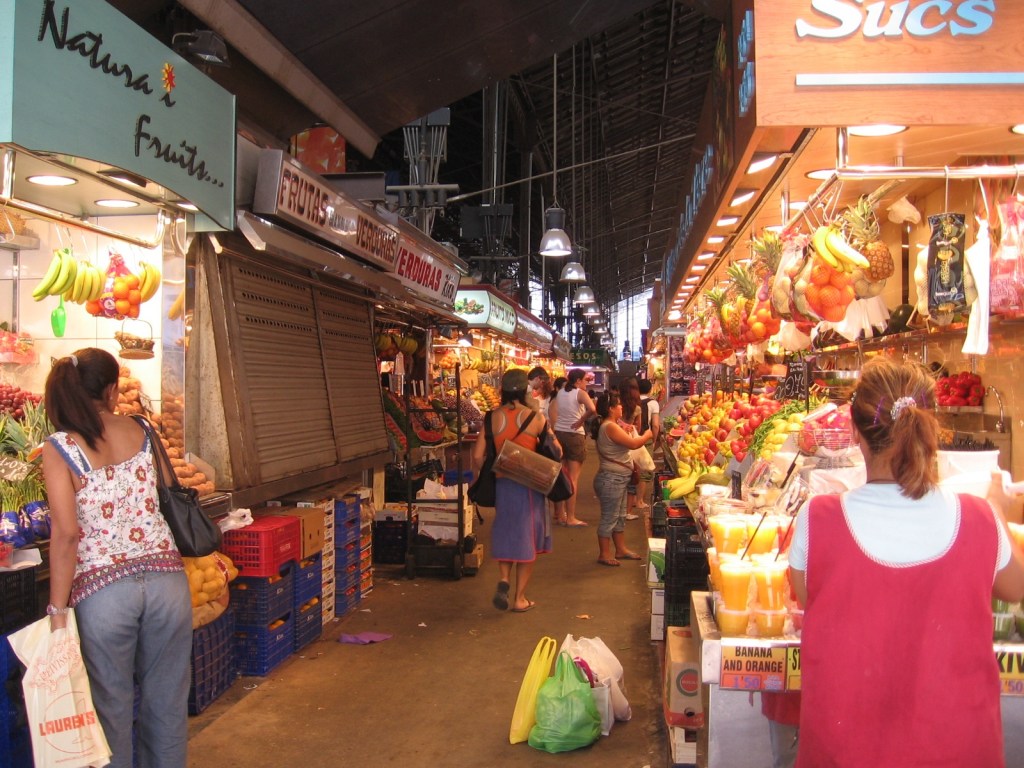
Starting in Barcelona, I was thrown by the topless women on the beaches, a little different to Australia! On that same day, I enjoyed flamenco dancing and sangrias (sweet alcoholic beverages). I experienced colourful markets that remain with me to this day.
In Madrid, I also experienced a bullfight, something I would never do again now that I understand the pain and suffering the bulls endure. It did give me an insight into a very old pastime in Spain. Two individuals attempted to scam me in Madrid by pretending to be police; as I had heard of this scam, I didn’t hand over my passport (it was safely locked away anyway) and insisted they take me to the police station instead of me paying an on-the-spot fine (they let me go with a warning – LOL). The architecture was also stunning.
I found the beaches of San Sebastian would be an ideal place to relax for an extended period.
2012
This time, I only had a short stop in Spain on the way to Argentina, staying in hotels rather than hostels. Once again I got to enjoy a flamenco show, so much energy and fun. I got to explore the historic towns of Segovia and Avila. The aqueduct of Segovia is a highlight and a lot about the Roman influence on this region.
Overall
Spain has a long and fascinating history and has had a significant influence on modern world history, so it’s definitely worth visiting. There is amazing history that I love to explore and understand when travelling, which covers several different cultures. There is also this fun energy which lifts you.
What has drawn me to Spain again?
This visit is primarily about getting started on a tour covering Portugal and Morocco; however, I will also get to explore and experience some of Spain’s charms.
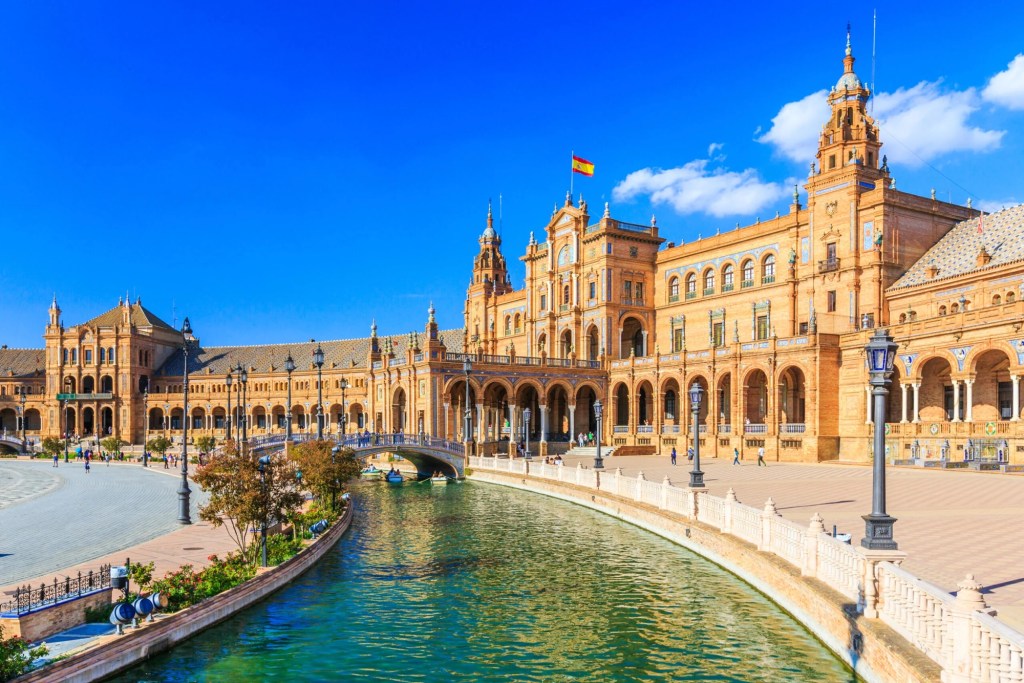
In Madrid, I’m looking forward to exploring some tapas and maybe experiencing some soccer culture. My highlight should be Seville; I’m hoping to see some Moorish architecture up close, maybe experience some vibrant flamenco culture, enjoy world-class tapas, and explore this walkable city.


Leave a Reply