Wednesday 25 November 2026
Highlights: Exploring the ancient city of Jerash Roman Ruins, cooking class making Maqluba, exploring Amman Citadel (Jabal Al-Qala’a), visiting the Roman Theatre in Amman, walking through Amman Old Town.
Our first big day exploring Jordan. We went down to enjoy the hotel’s breakfast buffet at 6.30 to be ready for our 7.30 am start today. Khader and Ghassan were ready to show us Jordan, and off we set for a drive to Jerash. While driving, Khader explained some history of Jordan and a lot about the areas we were passing through.
The Jerash Roman ruins (ancient Gerasa) are an extensive Greek-Roman archaeological site in northern Jordan, about 48 km north of Amman. They are sometimes called the “Pompeii of the East” and are considered one of the best Roman ruins outside Italy. Most of the Roman ruins at Jerash (ancient Gerasa) in Jordan were built between the 1st and 3rd centuries.
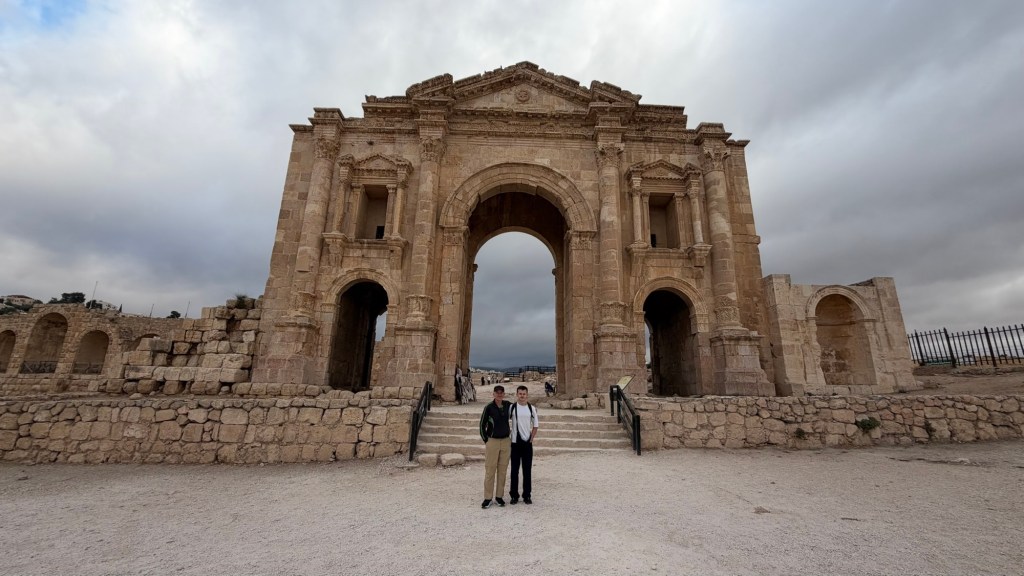
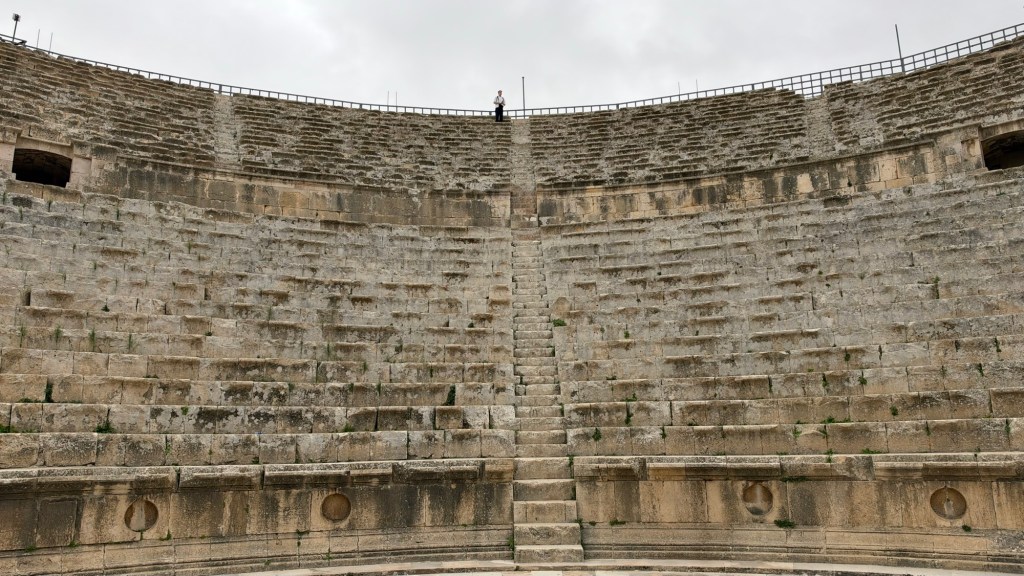
Khader provided a detailed overview of the history of these ruins and pointed out some neat things, like how the amphitheatre’s acoustics work, the different sounds limestone makes when struck, and the water system—a very cool way to spend a few hours at this stunning place.
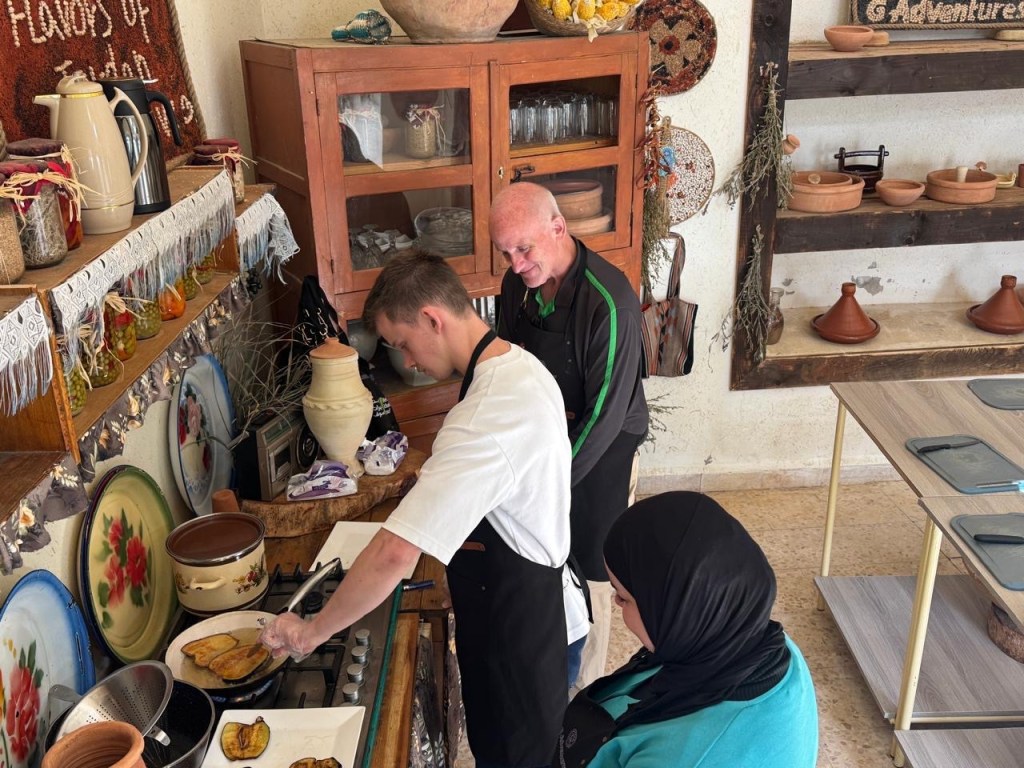
We eventually moved on to cooking classes at Beit Khairat Souf. This is a cultural heritage site run by a women-led organisation and supported by G Adventures through its Planterra community program. Today we learnt how to cook Maqluba, which is a traditional Jordanian Dish prepared with rice, chicken or meat, and vegetables such as eggplant, cauliflower, and potatoes. Once cooked, the pot is carefully flipped onto a large serving plate, creating a layered dish. We can then enjoy the fruits of our cooking for a tasty lunch.
We then drove back to Amman to visit and explore the Amman Citadel (Jabal Al-Qala’a). Driving there, we passed the Palestinian Refugee camp established in the 1950s. The camp houses 250,000 refugees in a small location, and it seems there will never be a resolution. Khader, being a Palestinian refugee himself, had some unique insights.
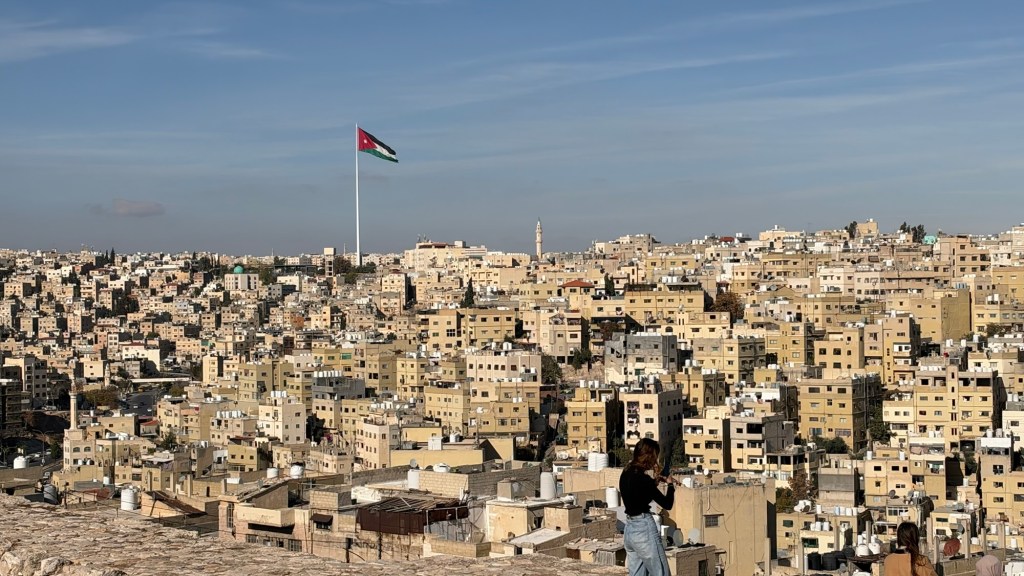
The Amman Citadel (the Fortress) is located on a citadel towering over Downtown Amman, in the central part of the capital of Jordan. The Amman Citadel is considered one of the world’s oldest continuously inhabited places. The visible structures span the Roman, Byzantine, and Umayyad periods.
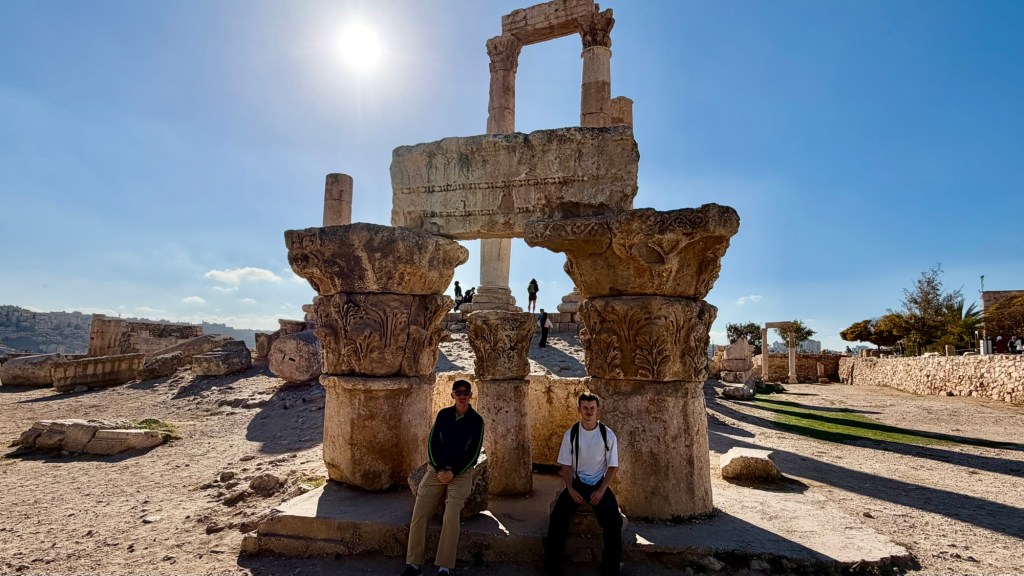
The citadel provided a great view of Amman Old Town, the new town and the Palestinian Refugee camp.
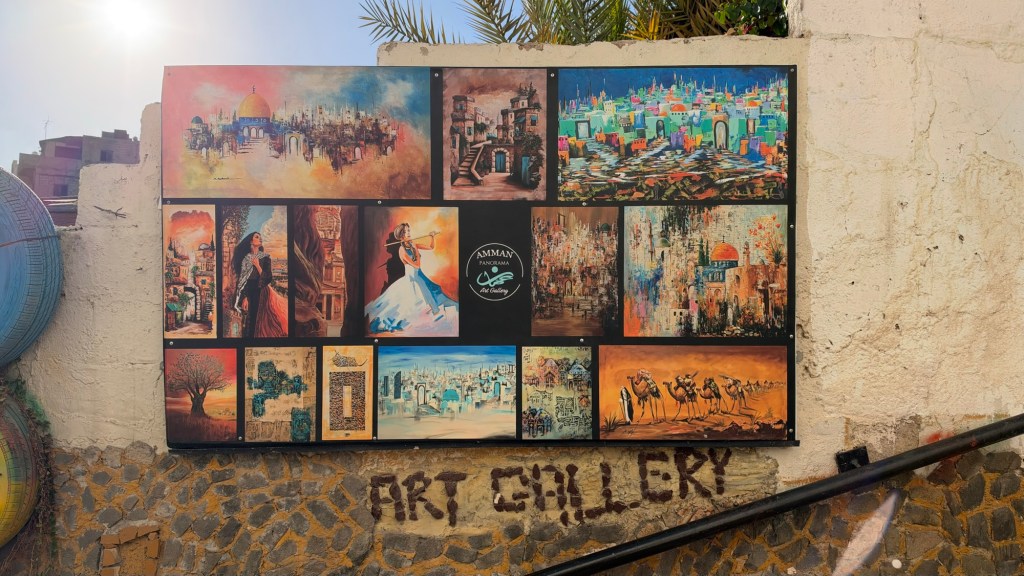
After an hour of exploring, we started walking to the Roman Theatre in Amman. On the way, we stopped in a local art gallery and saw some very good local artworks.
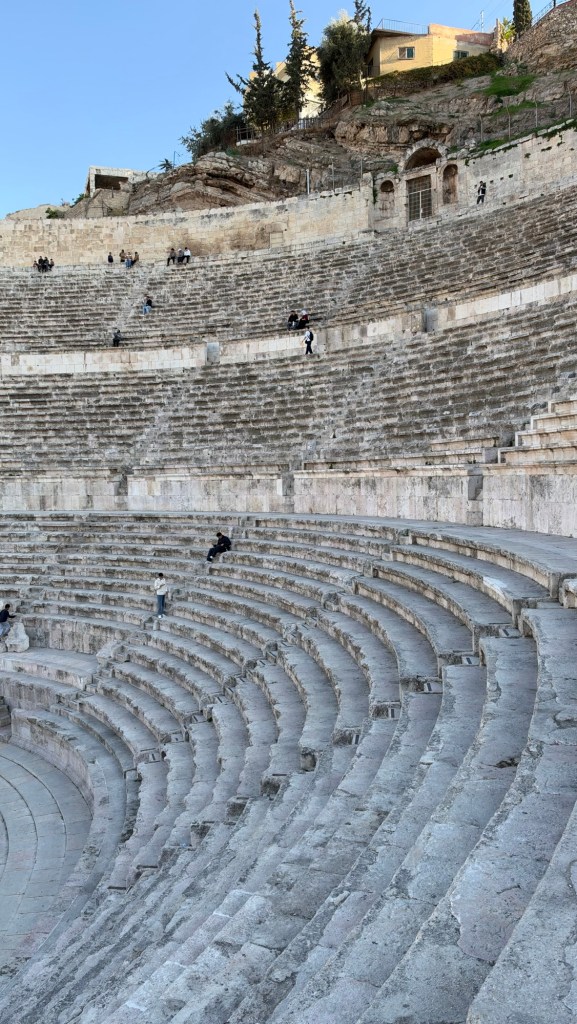
The Roman Theatre was similar to the one we saw in Jerash earlier today but bigger. This one was mostly carved out of the mountain, so it has survived the major earthquakes in this area.
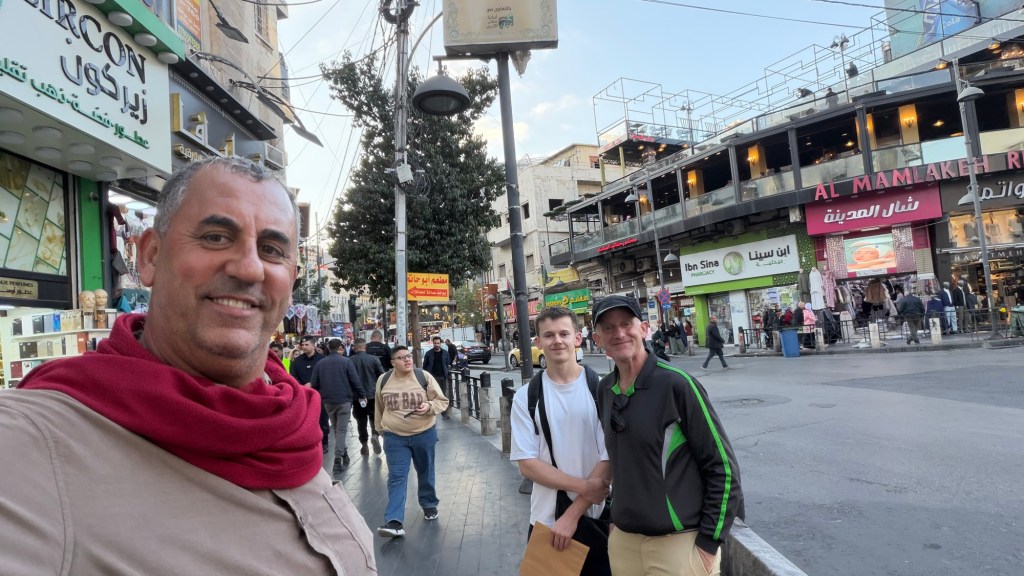
Our final adventure today was walking through the Old Town and being introduced to some local foods by Khader, including Muhallebi, a Middle Eastern milk pudding.
This was a long day with a lot of history provided by Khader. Harry found he needed a beer to reflect, so we went up to the 13th floor, overlooking Amman, and discussed what we learnt today.


Leave a Reply