

Official Name: Antigua and Barbuda
Established: 23 September 1859 (Antigua and Barbuda), 1 November 1981 (Independence from the United Kingdom)
Population: 100,772 (2022 estimate)
Country Size: 440 square kms
Religion: 92.7% Christian, 3.6% Rastafari
Language: English, Antiguan and Barbudan Creole
Currency: East Caribbean dollar (XCD)
Capital: St. John’s
Order of Visit: Eighty Ninth
First Visit: 01 January 2025
Last Visit: 01 January 2025
Duration: 1 Day
Highlights: Exploring the beautiful Antigua and Barbuda island, magnificent views from Shirley Heights, exploring the historic UNESCO Nelson’s Dockyard, enjoying the lush rainforest, scouting the Antiqua and Barbuda coastline on a catamaran across crystal-clear waters.
Cities: St. John’s
Antigua and Barbuda Journal Entry
Published 11 November 2024 | 25 March 2025
Location and Geography
Antigua and Barbuda is a archipelagic country in the Caribbean. It lies at the conjuncture of the Caribbean Sea and the Atlantic Ocean in the Leeward Islands part of the Lesser Antilles. The country consists of two major islands, Antigua and Barbuda, which are approximately 40 km apart, I’ll be visiting Antigua Island.
The islands generally experience low humidity and recurrent droughts. Temperatures average 27C. Hurricanes strike on an average of once a year.

History and Culture
Antigua was first settled by archaic age hunter-gatherer Native Americans called the Ciboney. Carbon dating has established the earliest settlements started around 3100 BC. Christopher Columbus was the first European to sight the islands in 1493. The Spanish did not colonise Antigua until after a combination of European and African diseases, malnutrition, and slavery destroyed most of the native population.
The English settled on Antigua in 1632 and Barbuda in 1685. Tobacco and then sugar was grown, worked by a large population of slaves transported from West Africa.
The English maintained control of the islands, repulsing an attempted French attack in 1666. Slaves led to revolts in 1701 and 1729. Slavery was abolished in the British Empire in 1833, affecting the economy. Antigua and Barbuda became part of the short-lived West Indies Federation from 1958 to 1962.
Antigua and Barbuda subsequently became an associated state of the United Kingdom on 27 February 1967. Antigua and Barbuda gained full independence on 1 November 1981 with the country opting to remain within the British Commonwealth (similar to Australia), retaining Queen Elizabeth as head of state, with a governor-general representing the Crown (but appointed on the advice of the Prime Minister).
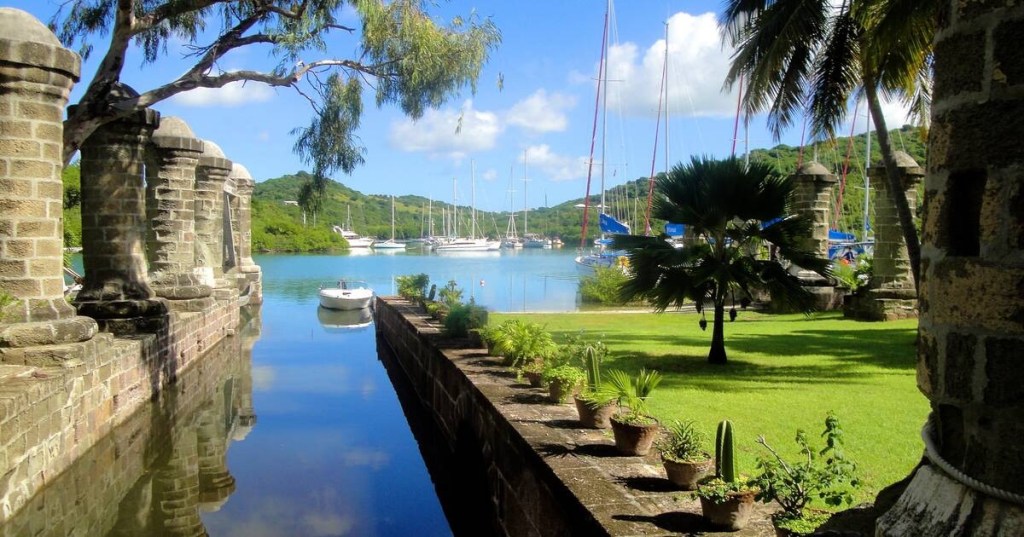
In 2016, Nelson’s Dockyard was designated as a UNESCO World Heritage Site.
Most of Barbuda was devastated in early September 2017 by Hurricane Irma, which brought winds with speeds reaching 295 km/h (185 mph). The storm damaged or destroyed 95% of the island’s buildings and infrastructure.
What has drawn me to visit Antigua and Barbuda?
My focus is on visiting the Antigua Island of Antigua and Barbuda and exploring the Dockyards (UNESCO World Heritage site built in 1725) and experiencing the islands rainforest and the waters and coastline. I’m hoping for a laid-back time.
What I experienced in Antigua and Barbuda
Beautiful landscape, structures, forests and waters with the soothing sun shining down made this a brilliant and relaxing stop on Antigua and Barbuda Island. The view from Shirley Heights was something from a paradise dream.

The greenery of the island resulted in almost spiritual contentment. Exploring the UNESCO Nelson’s Dockyard gave some insights into the history and importance of this area which I enjoyed.

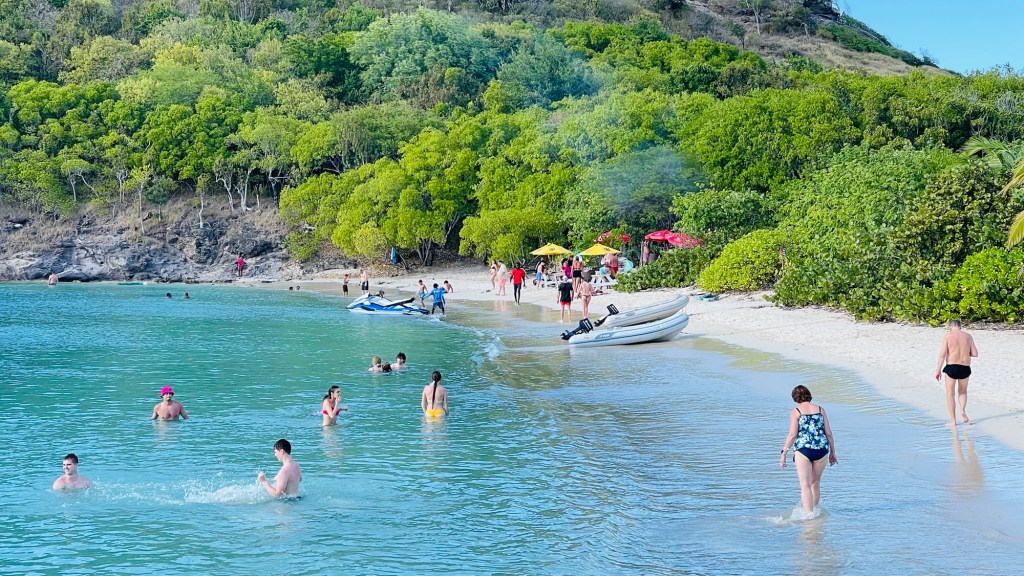
But paradise was confirmed taking a catamaran over crystal-clear and sprinkling waters along the coastline of this island.

I only briefly interacted with locals, but the various tour guides (locals) provided a lot of the history of the island, its culture and environment and the people who made the island. I appreciate the references to cricket and the great Viv Richards.
 Nathan's Insights
Leave a comment