
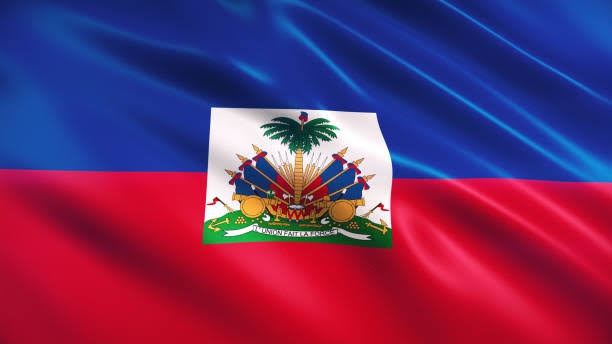
Official Name: Republic of Haiti
Established: 1804 (First Empire), 1915-1934 (USA Occupied), 1934 (Independence from USA)
Population: 11,470,261 (2023 estimate)
Country Size: 27,750 square kms
Religion: 87.0% Christianity, 10.7% no religion, 2.1% folk religions
Language: French, Haitian Creole
Currency: Gourde (HTG)
Capital: Port-au-Prince
Order of Visit: Eighty Fifth
First Visit: 28 December 2024 (planned)
Last Visit: 28 December 2024 (planned)
Duration: 1 Day
Expected Highlights: Nellie’s Tower, Dragon’s Rock, Haiti’s mountainous coastline, Haitian vodou, Norm’s Place, Beer Tasting
Haiti Journal Entry
Cities: Labadee
Published 10 October 2024 | 08 March 2025
Location and Geography
Haiti is a country on the island of Hispaniola, which is shared with the Dominican Republic, in the Caribbean Sea. Haiti is east of Cuba and Jamaica, and south of The Bahamas. It occupies the western three-eighths of the island.
Haiti has a total area of 27,750 square km. Haiti is the third largest country in the Caribbean, and with a population of approximately 11.4 million making it the most populous Caribbean country. The capital and largest city is Port-au-Prince.
Haiti is the most mountainous country in the Caribbean, its terrain consists of mountains interspersed with small coastal plains and river valleys. The climate is tropical. Temperatures are normally around 23 – 31c.
History and Culture
The island was originally inhabited by the Taíno people. The first Europeans arrived in December 1492 during the first voyage of Christopher Columbus. The island formed part of the Spanish Empire until 1697, when the western portion (modern day Haiti) was ceded to France and subsequently renamed Saint-Domingue.
French colonists established sugarcane plantations, worked by slaves brought from Africa. In the midst of the French Revolution, enslaved persons, maroons, and free people of colour launched the Haitian Revolution (1791–1804). Napoleon’s forces were defeated by Jean-Jacques Dessalines (later Emperor Jacques I), who declared Haiti’s sovereignty on 1 January 1804, leading to a massacre of the French.
Haiti became the first independent state in the Caribbean, the second republic in the Americas, the first country in the Americas to officially abolish slavery, and the only country in history established by a slave revolt.
in 1915, Haiti’s President Vilbrun Guillaume Sam was killed by a lynch mob. Fearing the emergence of a new government led by the anti-American Haitian politician Rosalvo Bobo, President Woodrow Wilson sent U.S. Marines into Haiti in July 1915. Within weeks, a new pro-U.S. Haitian president, Philippe Sudré Dartiguenave, was installed and a new constitution written that was favourable to the interests of the United States. The constitution (written by future US President Franklin D. Roosevelt) included a clause that allowed, for the first time, foreign ownership of land in Haiti.
After U.S. forces left in 1934, Dominican dictator Rafael Trujillo used anti-Haitian sentiment as a nationalist tool. In an event that became known as the Parsley Massacre, he ordered his army to kill Haitians living on the Dominican side of the border. 20,000–30,000 Haitians were bludgeoned and bayoneted to death.
Haiti experienced three decades of dictatorship under the Duvalier family (1957–1986), which brought state-sanctioned violence, corruption, and economic stagnation. Following a coup d’état in 2004, the United Nations intervened to stabilize the country.
In 2010, Haiti suffered a catastrophic earthquake, followed by a deadly cholera outbreak. With its deteriorating economic situation, the country has experienced a socioeconomic and political crisis marked by riots and protests, widespread hunger, and increased gang activity. On 25 April 2024 Transitional Presidential Council of Haiti took over the Governance of Haiti and is scheduled to stay in power until 2026. As of May 2024, Haiti has no remaining elected government officials and has been described as a failed state.
What has drawn me to visit Haiti?
The main reason to visit Haiti is I wanted to undertake a cruise of the Caribbean and see and experience a little of this region. I know on a cruise the experience will mostly be on the landscape and waters with little interaction with local culture which is a shame but at least for Haiti is probably necessary with all the security and criminal issues.

I’m hoping to at least learn a little of the history of Haiti, tragic as it is, and to enjoy the climate. I know Haiti, and most of this region, have also suffered with earthquakes and hurricane. I hope that some of the tourist fees help people in this region. I also hope that the negative stories I have heard about Haiti can be a little more balanced by understanding the beauty of this country.
What I experienced in Haiti
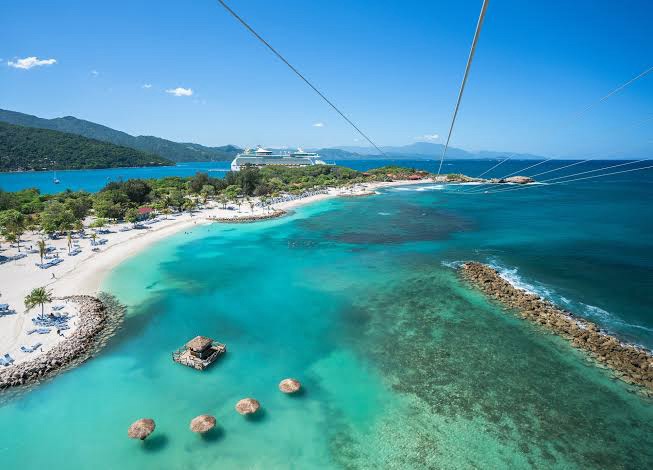
Visiting a country by cruise limits your opportunities to experience its culture especially if the port being is controlled by the cruise company as was the case in Labadee. Starting with a positive was enjoying the view of the coastline with the beautiful waters gleaming.

I organised to do two excursions while in port. The first was in the artificially created beach resort area titled the Labadee Historic Walking Tour. This walking tour was led by a local who explained the complicated and sometimes tragic history of Haiti and the isolation of this area from the capital. The walking tour did expose me to more of the beautiful shoreline which was a positive.
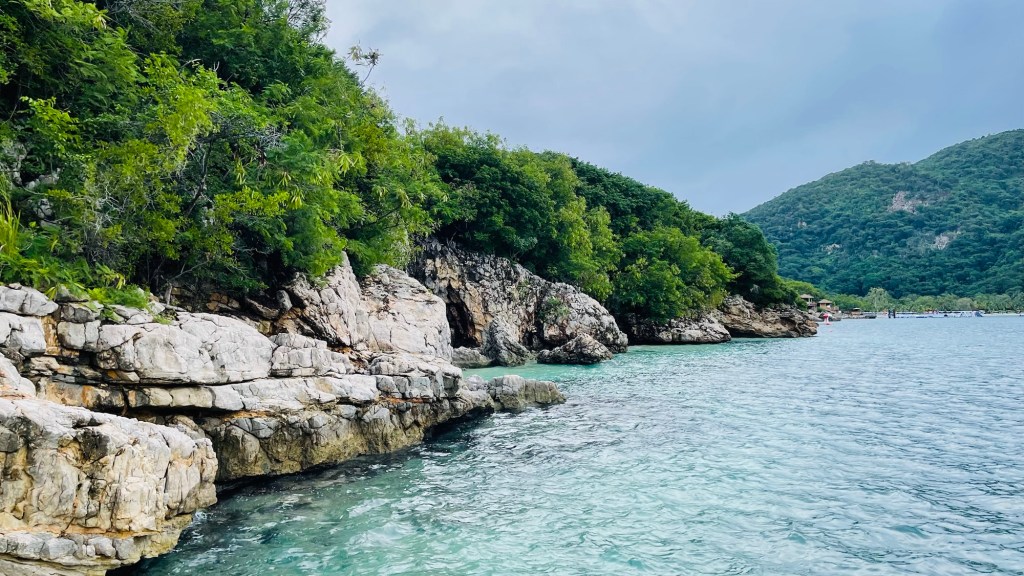
The second excursion booked was Labadee Traditions which was much better as we left the controlled area and visited a local village. The village put on demonstrations of their culture. I also enjoy the small boat trip to the village. The warm rain added to the feeling of at least a little realism.

This visit was a safe way to learn some of Haiti’s history, and have a few interactions with locals, with the highlight being the landscape and environment.
 Nathan's Insights
Leave a comment