

Official Name: Republic of Tajikistan
Established: 819 (Samanid Empire) / 9 September 1991 (Independence from USSR)
Population: 9.7 million (2022 estimate)
Religion: Muslim (96.4%)
Official Languages: Tajik & Russian
Capital: Dushanbe
Order of Visit: 75
First Visit: 17 May 2023
Last Visit: 21 May 2023
Duration: 5 Days
Highlights: National Museum of Antiquities, Rudaki Park, Iskander Darya waterfall, Gazza Village, The wonderous mountain ranges, Hiking the Voru River, Exploring Istaravshan, Hazrati-Shoh Mosque, Mug Teppe Fortress, Museum of Sughd, Panjshanbe Bazaar.
Cities: Dushanbe, Kuli Iskandarkul, Gazza Village, Khŭjand
Published: 30 March 2023 | Updated: 01 July 2024
Location and Geography
Tajikistan is a landlocked country in Central Asia covering 142,326 square kilometres and is bordered by Afghanistan to the south, Uzbekistan to the west, Kyrgyzstan to the north, and China to the east.

History and Culture
The territory that now constitutes Tajikistan was previously home to several ancient cultures, including the city of Sarazm of the Neolithic and the Bronze Age and later the Oxus civilization, and has been influence by many different cultures and religions including the Andronovo culture, Buddhism, Nestorian Christianity, Hinduism, Zoroastrianism, Manichaeism, and Islam.
The region was eventually conquered by the Russian Empire Between 1864 and 1885 and subsequently by the Soviet Union (USSR). Within the Soviet Union, the country’s modern borders were drawn when it was part of Uzbekistan as an autonomous republic before becoming a full-fledged Soviet republic in 1929.
On 9 September 1991, Tajikistan declared itself an independent sovereign nation as the Soviet Union was disintegrating. A civil war was fought almost immediately after independence, lasting from 1992 to 1997. Since the end of the war, newly established political stability and foreign aid have allowed the country’s economy to grow.
Most of Tajikistan’s population belongs to the Tajik ethnic group, who speak the Tajik language — the first official language — making it one of the three Persian speaking countries alongside Afghanistan and Iran. Russian is used as the official inter-ethnic language. Nearly 29% of Tajikistan’s GDP came from immigrant remittances (mostly from Tajiks working in Russia), one of the highest rates in the world.
Drug trafficking is the major illegal source of income in Tajikistan as it is an important transit country for Afghan narcotics bound for Russia.
Tajikistan is a member of the Commonwealth of Independent States, the Economic Cooperation Organisation and the Shanghai Cooperation Organisation.
What drew me to visit Tajikistan?
To experience some of the highest-altitude landscapes in the world and explore the beautiful lakes, to experience the Tajik culture and traditions and see how the USSR influenced this region.
What I experienced in Tajikistan
My Tajikistan visit exposed me to the countryside of this wonderous and beautiful country. The snow capped mountains, to the waterfalls and lovely lakes highlighted the nature of this region.
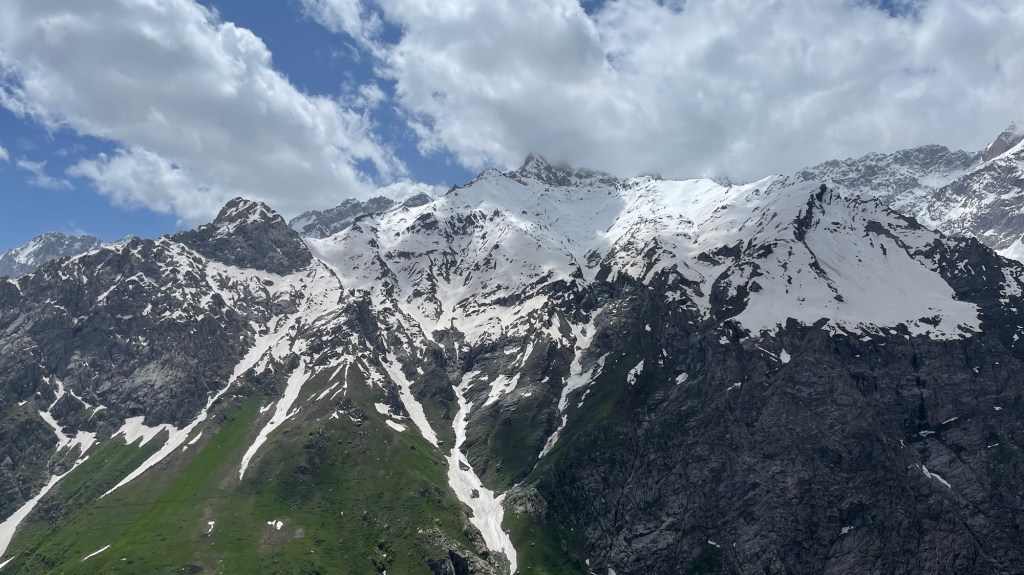
Visiting more remote areas I got to see more traditional living, experiencing more local food and cultural music.

Hiking to the very remote Voru Village I passed locals living more simple life, uncomplicated but harsh, and with a community focus. Everyone seemed to warmly greet their neighours.
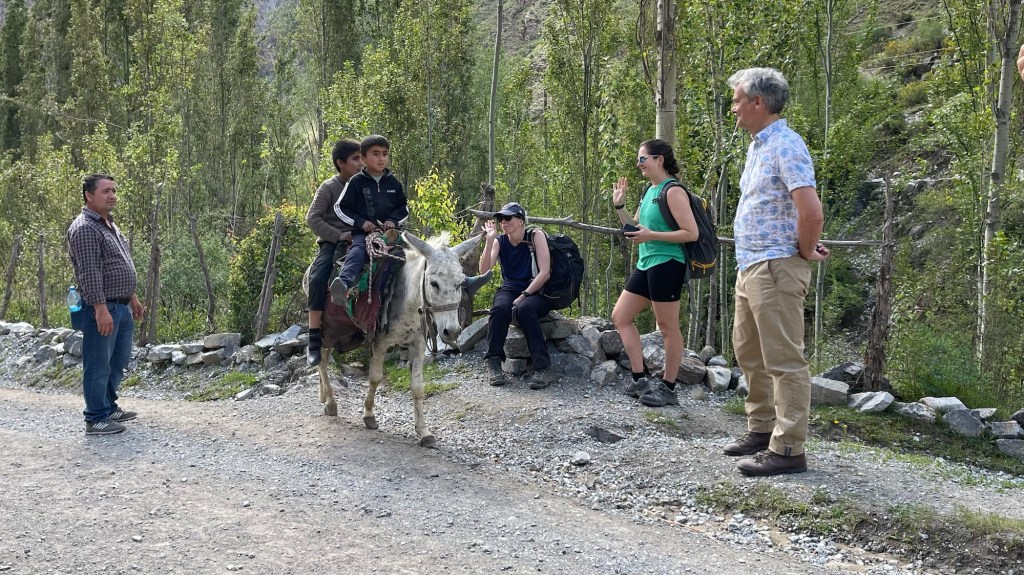
At the the Hazrati-Shoh Mosque, located in Istaravshan, I learned about the Five Pillars of Islam the core beliefs and practises. The zakat pillar (Alms) of donating a potion of income to community members in need was a very positive aspect I didn’t know about. In Australia, as a western country, you do not hear a lot about the positives of non-Christian beliefs but all religions usually have community support at there heart.

I also got good insight into local life exploring Panjshanbe Bazaar in Khŭjand. Local markets are centres of activity, colour and life. I feel you can tell a lot about a people, their community, and economic environment (good and bad) by experiencing local markets.
Note: This visit was part of the Five Stans of Silk Road G Adventures tour that saw me visiting; Kyrgyzstan, Kazakhstan, Tajikistan, Uzbekistan, Turkmenistan.
 Nathan's Insights
Leave a comment