

Official Name: Republic of Kazakhstan
Established: 1465 (Kazakh Khanate) / 16 December 1991 (Independence USSR)
Population: 19.3 million (2022 estimate)
Religion: Muslim (69%), Christian (17%), Unknown (11%)
Official Languages: Kazakh & Russian
Capital: Astana
Order of Visit: 74
First Visit: 15 May 2023
Last Visit: 17 May 2023
Duration: 3 Days
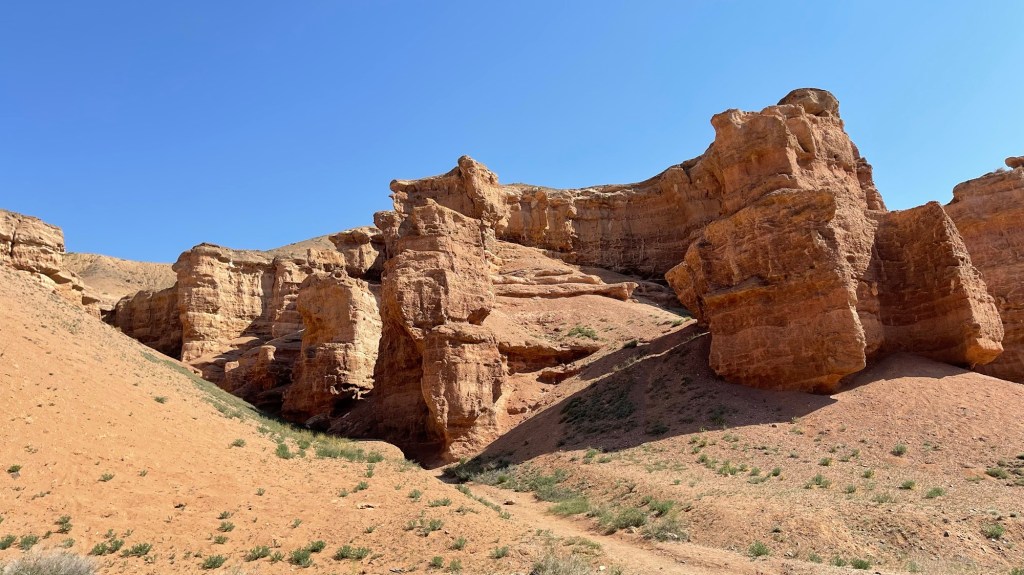
Highlights: 4×4 vehicle then Soveit era van and then hiking in beautiful Kolsay Lakes National Park, Hiking and exploring the standstones in Charyn Canyon, the monuments, parks and churches of Almaty
Cities Visited: Saty Village, Almaty
Published: 28 March 2023 | Updated: 27 June 2024
Location and Geography
Kazakhstan is a transcontinental landlocked country located mainly in Central Asia and partly in Eastern Europe. It borders Russia to the north and west, China to the east, Kyrgyzstan to the southeast, Uzbekistan to the south, and Turkmenistan to the southwest, with a coastline along the Caspian Sea.
With a population of 19 million people and an area of 2,724,900 square kilometres and is the world’s largest landlocked country. Kazakhstan also has one of the lowest population densities in the world, at fewer than 6 people per square kilometre.

History and Culture
The Kazakh territory was a key part of the Eurasian trading Steppe Route, the ancestor of the terrestrial Silk Roads. Archaeologists believe that humans first domesticated the horse occurred in this region.
The first Turkic Khaganate was founded by Bumin in 552 on the Mongolian Plateau and quickly spread west toward the Caspian Sea.
Mongol rule commenced around the early 13th century. Under the Mongol Empire, the first strictly structured administrative districts (Ulus) were established. After the division of the Mongol Empire in 1259, the land that would become modern-day Kazakhstan was ruled by the Golden Horde.
In 1465, the Kazakh Khanate emerged as a result of the dissolution of the Golden Horde. Established by Janibek Khan and Kerei Khan, it continued to be ruled by the Turco-Mongol clan of Tore (Jochid dynasty). Throughout this period, traditional nomadic life and a livestock-based economy.
In the late nineteenth century, the eastern part of what is today Kyrgyzstan, mainly the Issyk-Kul Region, was ceded to the Russian Empire by Qing China through the Treaty of Tarbagatai. The territory, then known in Russian as “Kirghizia”, was formally incorporated into the Empire in 1876. The Russian takeover was met with numerous revolts, and many of the Kyrgyz opted to relocate to the Pamir Mountains and Afghanistan.
In the 19th century, the Russian Empire began to expand its influence into Central Asia. The “Great Game” period is generally regarded as running from approximately 1813 to the Anglo-Russian Convention of 1907. The tsars effectively ruled over most of the territory belonging to what is now the Republic of Kazakhstan. During the 19th century, about 400,000 Russians immigrated to Kazakhstan, and about one million Slavs, Germans, Jews, and others immigrated to the region during the first third of the 20th century.
Following the collapse of central government in Petrograd in November 1917, the Kazakhs experienced a brief period of autonomy (the Alash Autonomy) before eventually falling under the Bolsheviks′ rule. On 26 August 1920, the Kirghiz Autonomous Socialist Soviet Republic within the Russian Soviet Federative Socialist Republic (RSFSR) was established.
On 25 October 1990, Kazakhstan declared its sovereignty on its territory as a republic within the Soviet Union. Following the August 1991 aborted coup attempt in Moscow, Kazakhstan declared independence on 16 December 1991, thus becoming the last Soviet republic to declare independence.
Kazakhstan’s communist-era leader, Nursultan Nazarbayev, became the country’s first President. Nazarbayev ruled in an authoritarian manner. An emphasis was placed on converting the country’s economy to a market economy while political reforms barely advanced. In March 2019, Nazarbayev resigned 29 years after taking office. However, he continued to lead the influential security council and held the formal title Leader of the Nation.
Kazakhstan is a member of the Commonwealth of Independent States, the Economic Cooperation Organisation, and the Shanghai Cooperation Organisation. The nations of Kazakhstan, Russia, Belarus, Kyrgyzstan, and Tajikistan established the Eurasian Economic Community in 2000, to revive earlier efforts to harmonise trade tariffs and to create a free trade zone under a customs union.
China is one of the main economic and trade partners of Kazakhstan. In 2013, China launched the Belt and Road Initiative (BRI) in which Kazakhstan functions as a transit hub. Compared to its closest neighbours Kazakhstan has a strong and relatively open economy.
What drew me to visit Kazakhstan?
To see and experience some of the untouched natural beauty of this country that is rarely visited. To see the highly regarded Charyn Canyon and to learn about Silk Road and how this country with the longest border with Russia has developed especially during the Communist era.
This visit was part of the Five Stans of Silk Road G Adventures tour that will see me visiting; Kyrgyzstan, Kazakhstan, Tajikistan, Uzbekistan, Turkmenistan.
What I experienced in Kazakhstan
I was only in Kazakhstan for a few days, but I got to see the natural beauty of this country. Kolsay Lakes National Park, with its sunken forest and greenery, was a fantastic experience but the add bonus of using a combination of 4×4 vehicles and old soviet era vans to get to the park really enhanced my enjoyment.

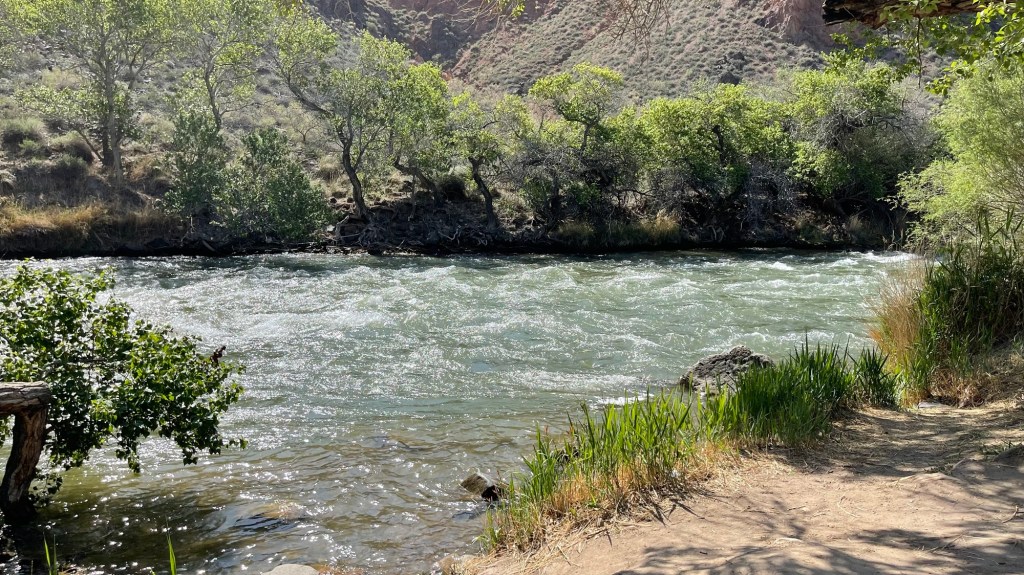
Later hiking the Charyn Canyon with its stunning sandstone structures and breathtaking formations was well worth doing. I recall the peace I felt when I got to the furthermost point of the hike and sat next to running water, the fresh and cool air touching me face as I closed my eyes and just relaxed and listened. This experience was immediately contrasted with the hike back as the heat had risen with the heat, really highlighting the beauty of nature but the danger if not prepared for the conditions. Lucky I was only there for half a day and during the best weather.
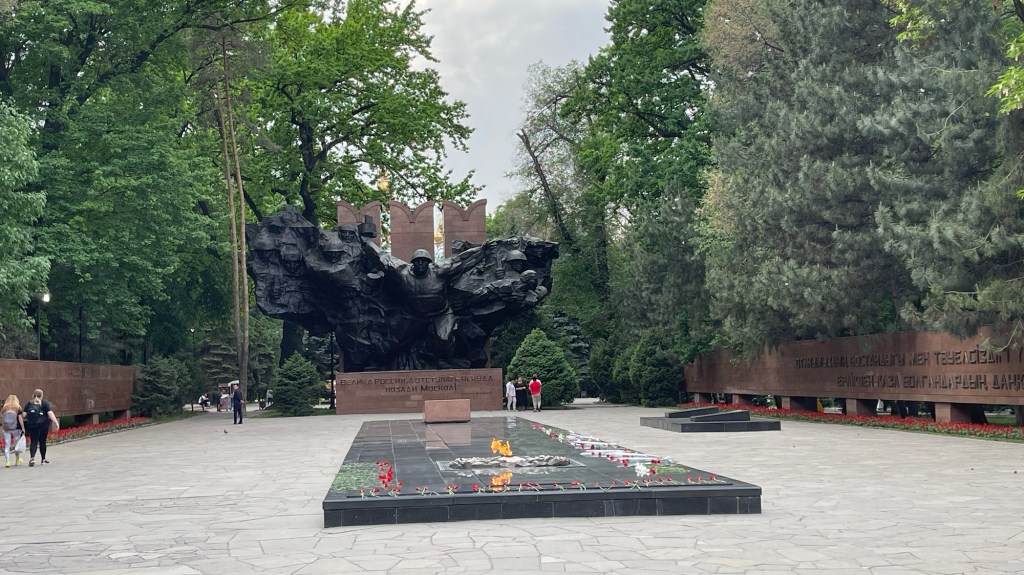
Almaty gave me some understanding of city life in Kazakhstan. I found a strong Russian presence in monuments including Zenkov Cathedra a beautiful Russian Orthodox Church. I did try some Kazakhstan chocolate which was very tasty and apparently well known in the region. The Green Bazaar was also an insight into daily life as people sold and bargained for goods.
 Nathan's Insights
Leave a comment