
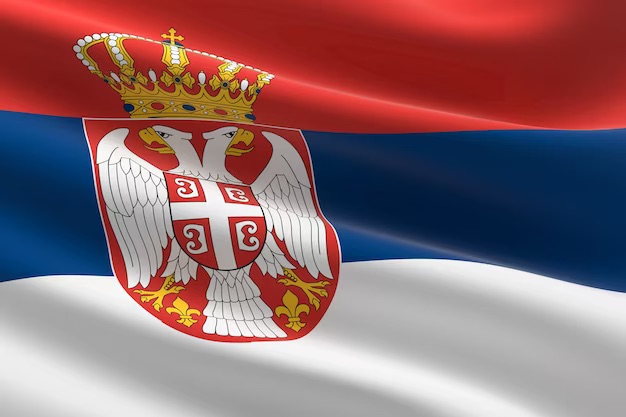
Official Name: Republic of Serbia
Established: 1217 (Kingdom)
Population: 6.6 million (2022 census)
Religion: 86.8% Christian (81.1% Serbian Orthodoxy), 4.2 Islam
Language: Serbian
Currency: Serbian dinar
Capital: Belgrade
Order of Visit: Eightieth
First Visit: 21 April 2024
Last Visit: 24 April 2024 (planned)
Duration: 4 Days
Highlights: Petrovaradin Fortress (Novi Sad), Belgrade Fortress, Yugo Car exerience, buildings bombedby NATO in 1990s, Josip Broz Tito Memorial, Semlin Concentration Camp (or rather the lack of acknowledgment of this camp)
Cities: Novi Sad, Belgrade
Serbia Journal Entries
Location and Geography
Serbia is a landlocked country at the crossroads of Southeast and Central Europe, located in the Balkans covering 88,361 square kilometres (size disputed due to Kosovo). Serbia shares land borders with Hungary to the north, Romania to the northeast, Bulgaria to the southeast, North Macedonia to the south, Croatia and Bosnia and Herzegovina to the west, and Montenegro to the southwest. Serbia also claims a border with Albania through the disputed territory of Kosovo.

History and Culture
Around 6,500 years BC the Starčevo and Vinča cultures existed in the region of modern-day Belgrade. The Celtic tribe of Scordisci settled throughout the area in the 3rd century BC. They formed a tribal state, building several fortifications, including their capital at Singidunum (present-day Belgrade).
The Romans conquered much of the territory in the 2nd century BC. In 167 BC, the Roman province of Illyricum was established; the remainder was conquered around 75 BC, forming the Roman province of Moesia Superior.
When the Roman Empire was divided in 395, most of Serbia remained under the Byzantine Empire. At the same time, its north-western parts were included in the Western Roman Empire.
White Serbs eventually settled in an area between the Sava River and the Dinaric Alps. By the beginning of the 9th century, Serbia achieved a level of statehood. Between 1166 and 1371, Serbia was ruled by the Nemanjić dynasty under whom the state was elevated to a kingdom in 1217.
In 1389 in the Battle of Kosovo (1389) Serbia was defeated by the Ottoman Empire. During the Habsburg-Ottoman war (1683–1699), much of Serbia switched from Ottoman rule to Habsburg control from 1688 to 1690, including the cities of Belgrade, Čačak, Užice and Niš, as well as the area of present-day Kosovo.
In 1718–39, the Habsburg monarchy occupied much of Central Serbia and established the Kingdom of Serbia as crownland. Those gains were lost by the Treaty of Belgrade in 1739, when the Ottomans retook the region. The Serbian Revolution for independence from the Ottoman Empire lasted eleven years, from 1804 until 1815 however full independence from the Ottoman Empire on occurred in 1878.
In the course of the First Balkan War in 1912, the Balkan League defeated the Ottoman Empire and captured its European territories, which enabled territorial expansion of the Kingdom of Serbia into regions of Raška, Kosovo, Metohija, and Vardarian Macedonia.
The assassination of Archduke Franz Ferdinand of Austria on 28 June 1914 in Sarajevo by Gavrilo Princip, a member of the Young Bosnia organisation, led to Austria-Hungary declaring war on Serbia, on 28 July 1914. Local war escalated when Germany declared war on Russia and invaded France and Belgium, thus drawing Great Britain into the conflict that became the First World War. While Serbia was occupied by the Central Powers during this war they eventually won.
On 1 December 1918, in Belgrade, Serbian Prince Regent Alexander Karađorđević proclaimed the Kingdom of the Serbs, Croats, and Slovenes, under King Peter I of Serbia. This was effectively the start of Kingdom of Yugoslavia.
In 1941, despite Yugoslav attempts to remain neutral in the war, the Axis powers invaded Yugoslavia. The territory of modern Serbia was divided between Hungary, Bulgaria, the Independent State of Croatia, Greater Albania and Montenegro, while the remaining part of the occupied Serbia was placed under the military administration of Nazi Germany.
Near the end of the WW2 with the victory of the Communist Partisans in this region resulted in the abolition of the monarchy and a subsequent constitutional referendum. A one-party state was soon established in Yugoslavia by the Communist Party of Yugoslavia. It is claimed between 60,000 and 70,000 people died in Serbia during the 1944–45 communist takeover and purge. Serbia became a constituent republic within the Federal People’s Republic of Yugoslavia.
In 1989, Slobodan Milošević rose to power in Serbia. Milošević promised a reduction of powers for the autonomous provinces of Kosovo and Vojvodina. This and other factors lead to the eventual breakup of Yugoslavia, with Slovenia, Croatia, Bosnia and Herzegovina, and Macedonia declaring independence during 1991 and 1992.
In 1998, continued clashes between the Albanian guerrilla Kosovo Liberation Army and Yugoslav security forces led to the short Kosovo War (1998–99), in which NATO intervened, leading to the withdrawal of Serbian forces and the establishment of UN administration in the province. After the Yugoslav Wars, Serbia became home to highest number of refugees and internally displaced persons in Europe.
Milošević was eventually deposed in 2000 and sent to the International Criminal Tribunal for the former Yugoslavia. In 2003, the Federal Republic of Yugoslavia was renamed Serbia and Montenegro. On 21 May 2006, Montenegro held a referendum to determine whether to end its union with Serbia which was successful. On 5 June 2006 by Serbia’s declaration of independence, marking the final dissolution of the State Union of Serbia and Montenegro, and the re-emergence of Serbia as an independent state.
The Assembly of Kosovo unilaterally declared independence from Serbia on 17 February 2008. Serbia immediately condemned the declaration and continues to deny any statehood to Kosovo. While Serbia is relatively stable and holds elections not everyone believes Serbia is a full democracy.
What drew me to visit Hungary
Serbia has a long a bloodied history and has been the central of a lot of Europe conflict and history. It took me a long time to understand just the surface of this history. Serbia’s link to the start of World War 1 starting a conflict that for the most part saw the end of Empires. Serbia being behind the Iron Curtain is also fascinating history. And lastly Serbia being involved in the first ever NATO military interventions in 1995 and a later NATO air campaign targeting infrastructure in Serbia and Serbian forces in Kosovo.
Attempting to understand this history and the scars it must still carry are part of wanting to visit this region. I recall watching the bombing attacks in 1999 and I recall Slobodan Milošević and the love Serbians appeared and some still appear to have for a convicted war criminal for ethnic cleansing.
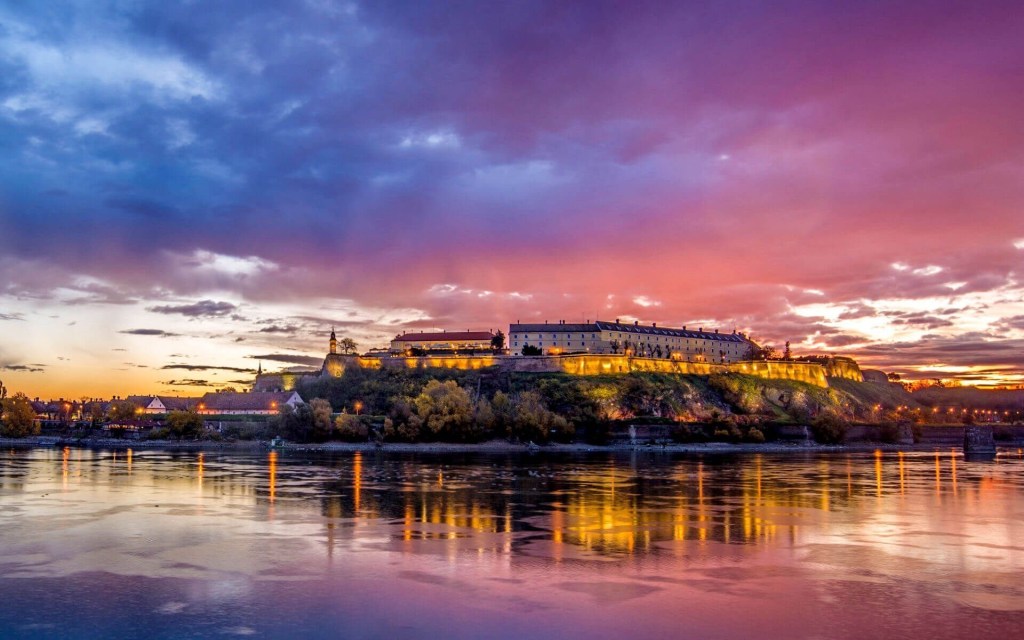
On a more positive note, I want to visit in Novi Sad the Petrovaradin Fortress and in Belgrade the Kalemegdan Fortress and the Danube River which is the second-longest river in Europe.

What I experienced
Serbia is a most complex country. The locals have a lot of pride in their country and see it as the natural ruler of the region. There is a distrust of ‘western’ countries in partular the USA and NATO with reminders of why that mistrust exists with bombed buildings from 1990s left in disrepair.
The Belgrade Fortress is a massive and very impressive structure which is at the confluence of the Danube and Sava Rivers. Serbia Orthodox Churches dominate.
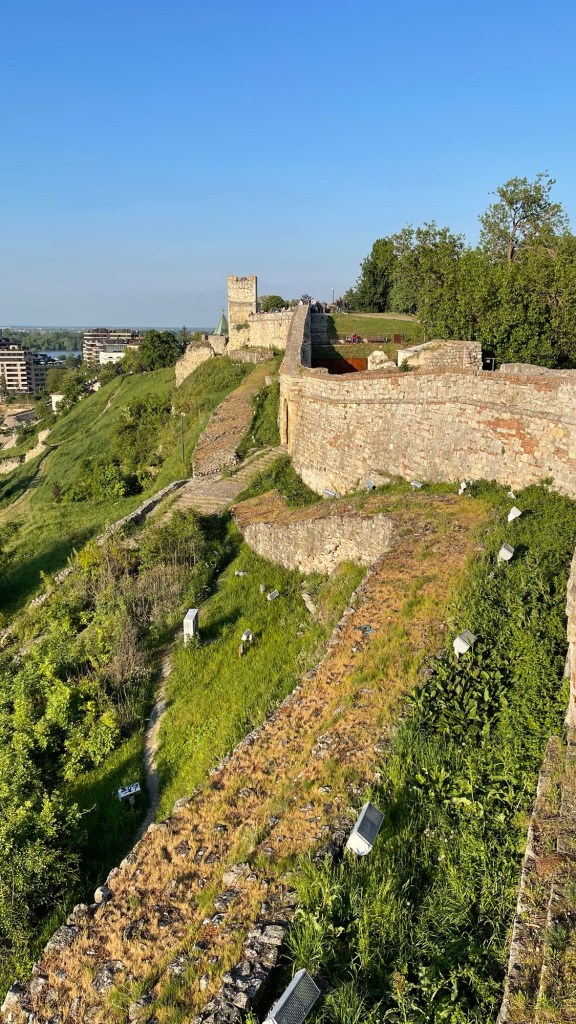
Exploring the Petrovararadin Fortress in Novi Sad, in particular it’s underground defenses was a great way to understand the conflicits of the past and the challenges of being at the edge of the Ottoman and Austria-Hungarian Empires.

I had a lot of fun driving around in the mini car that is a Yugo.

The locals also smoke a lot. More than any country I can remember visiting in the past. There is also a heavy focus on big meat meals when dinning.
Serbia felt very foreign to me. Strong, proud, tough and not has welcoming as other countries in the region. I also learnt after leaving Serbia how many countries in this region dislike Serbians, mostly due to the Balkan conflicits when Yugoslavia broke up.
Very glad I visited to better understand this country and the nationalist pride Serbians display at all times but I don’t expect I’d go back.
 Nathan's Insights
Leave a comment