

Official Name: Czechia
Established: 1198 (Kingdom of Bohemia), 1918 (Czechoslovakia), 1993 (Czech Republic)
Population: 10,693,939 (2020 estimate)
Religion: 75% No Religion, 10.3% Catholic
Language: Czech
Capital: Prague
Order of Visit: Fourteenth
First Visit: 14 May 2006
Last Visit: 17 April 2024
Duration: 12 Days
Visit Highlights: Terezin Small Fortress, Prague Palace, St Nicks Cathedral, Sedlec Ossuary (Bone Church), hiking a mountain, Exploring Moravsky Kras Caves, Cesky Krumlov Castle, Castle Gardens, Historic and beautiful Gardens
Places Visited: Prague, Dalecin, Cesky Krumlov, Moravian Krast
Czech Republic Journal Entries
History and Geography
Czech Republic is a landlocked country and is bordered by Austria to the south, Germany to the west, Poland to the northeast and Slovakia to the southeast and covers an area of 78,866 square kilometres (30,450 square miles).
In the 1st century, the Germanic tribes of the Marcomanni and Quadi settled there. Their king Maroboduus is the first documented ruler of Bohemia. During the Migration Period around the 5th century, many Germanic tribes moved westwards and southwards out of Central Europe. Most of the names of Czech rivers are Celtic or old Germanic in origin, dating from usage in those years.
The Duchy of Bohemia emerged in the late 9th century, when it was unified by the Přemyslid dynasty. The Duchy of Bohemia, raised to the Kingdom of Bohemia in 1198, was from 1002 until 1806 an Imperial State of the Holy Roman Empire alongside the Kingdom of Germany, the Kingdom of Burgundy, the Kingdom of Italy.
The 14th century, in particular, the reign of the Bohemian king Charles IV (1316–1378), who in 1346 became King of the Romans and in 1354 both King of Italy and Holy Roman Emperor, is considered the Golden Age of Czech history.
Between 1583–1611 Prague was the official seat of the Holy Roman Emperor Rudolf II and his court.
In 1679–1680 the Czech lands faced the devastating Great Plague of Vienna and an uprising of serfs.
In 1757 the Prussians invaded Bohemia and after the Battle of Prague (1757) occupied the city. More than one quarter of Prague was destroyed.
In 1770 and 1771 Great Famine killed about one tenth of the Czech population, or 250,000 inhabitants, and radicalised the countryside leading to peasant uprisings. Serfdom was abolished between 1781 and 1848. Several large battles of the Napoleonic Wars – Battle of Austerlitz, Battle of Kulm – took place on the current territory of the Czech Republic.
The end of the Holy Roman Empire in 1806 eventually led to becoming part of the Austrian Empire. The last King of Bohemia was Charles I of Austria who ruled in 1916–1918.
An estimated 1.4 million Czech soldiers fought in World War I, of whom some 150,000 died. Although the majority of Czech soldiers fought for the Austro-Hungarian Empire, more than 90,000 Czech volunteers formed the Czechoslovak Legions in France, Italy and Russia, where they fought against the Central Powers. In 1918, during the collapse of the Habsburg Empire at the end of World War I, the independent republic of Czechoslovakia, which joined the winning Allied powers, was created.
The effects of the Great Depression including high unemployment and massive propaganda from Nazi Germany, however, resulted in discontent and strong support among ethnic Germans for a break from Czechoslovakia. Adolf Hitler took advantage of this opportunity and using Konrad Henlein’s separatist Sudeten German Party, gained the largely German-speaking Sudetenland allowing Germany to bypass fortifications allowing for later occupation by Germany.
Approximately 345,000 Czechoslovak citizens, including 277,000 Jews, were killed or executed while hundreds of thousands of others were sent to prisons and Nazi concentration camps or used as forced labour.
After World War 2 almost the entire German-speaking minority in Czechoslovakia, about 3 million people, were expelled to Germany and Austria.
Czechoslovakia was a Communist state within the Eastern Bloc from 1948 until 1989. In November 1989, Czechoslovakia returned to a liberal democracy through the peaceful “Velvet Revolution”. On 1 January 1993, the country peacefully split into the independent countries of the Czech Republic and Slovakia. The Czech Republic joined NATO on 12 March 1999 and the European Union on 1 May 2004. On 21 December 2007 the Czech Republic joined the Schengen Area.
What I experienced
I visited the Czech Republic in 2006. One of my stronger memories is visiting a prison and execution centre from World War 2 at Terezin. This was a very sobering experience especially given there are still people alive from World War 2 making it more recent history.
Central Europe has experienced a lot of conflict and what is now Czech Republic was a big part of this bloody history.
On a more positive note during the reign of the Bohemian King Charles IV (1316–1378) there was a lot of amazing construction which still survives to this day, notably Charles Bridge and Prague Castle.
The Czech Republic also throw up the weird in the surprisingly beautiful Bone Church (Sedlec Ossuary), this was a surreal experience. The mountains and caves around Moravsky Kras are very worth exploring.
Český Krumlov, located in the Bohemian south, was easily one of the highlights of my 2006 European trip, it is one of the most picturesque towns in Europe and a UNESCO World Heritage Site. I also found the meals and beers to be cheap and the people friendly enough.
Revisiting the Czech Republic in 2024 but this time on a tour and with a niece instead of 2006 independent travel gave me a different perspective. In Prague I undertook a Jewish Quarter walking tour which was highly educational and exposed me to history I missed the last time I was in Prague.
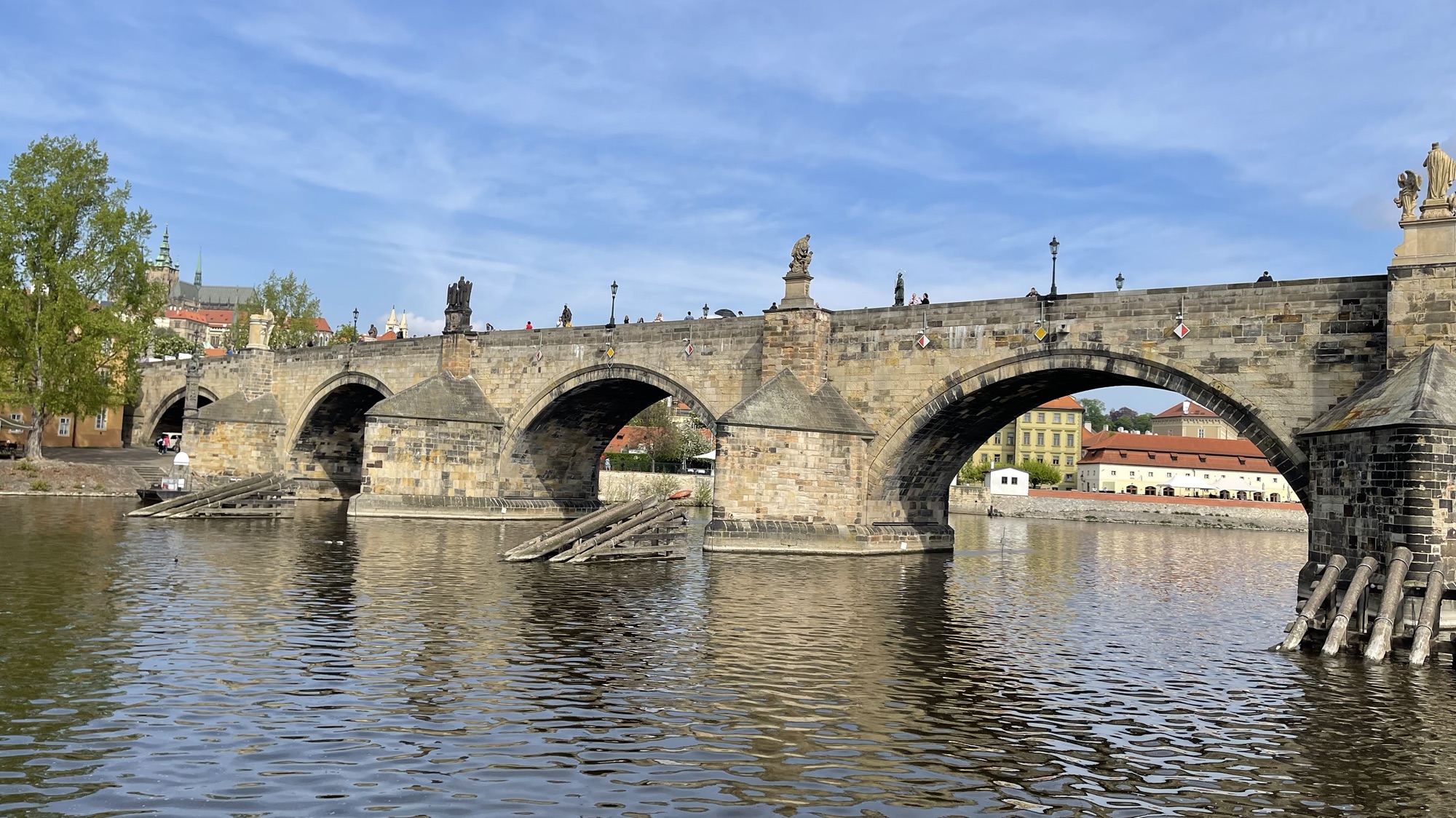
Further doing a cruise of the Vltara River gave me a different view of Prague from the water and having a guide of the Prague Castle helped me better understand its history and importance. And while it was commercial the folklore night of singing and dancing was enjoyable. 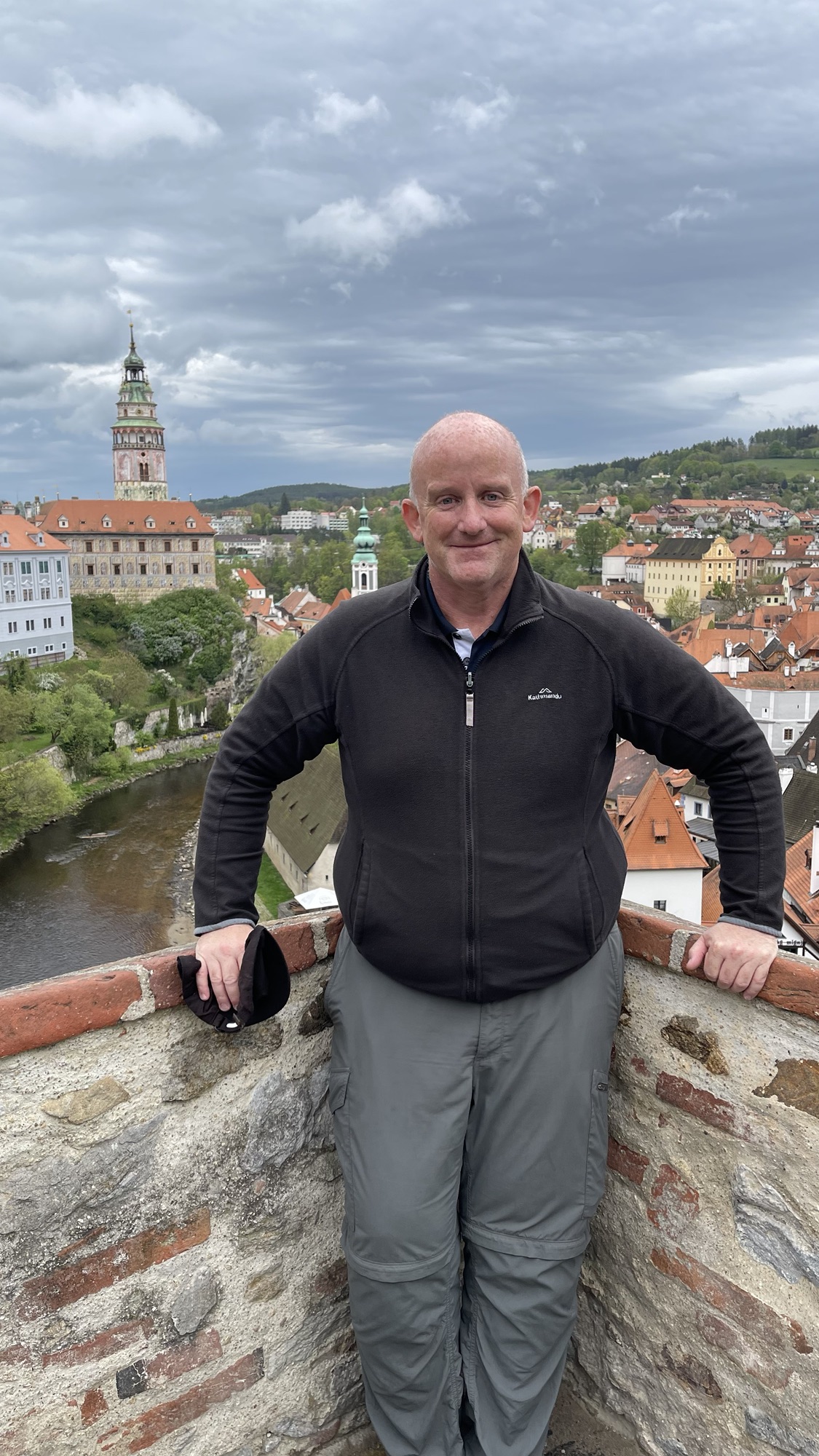
Český Krumlov was as beautiful as I remembered but this time I got to know the history of this town with a guided walking tour. Seeing photos of the history, in particular the Soviet era when the town was falling apart, highlighted the rise, fall and renewal of this stunning town.
My second visit to the Czech Republic was well worth it, and I now understand the benefits of going back to places and seeing different perspectives and having different experiences.
<Updated 20 May 2024>
 Nathan's Insights
Leave a comment