

Official Name: Republic of Poland
Established: 960 (Duchy of Poland)
Population: 38 million (2022 census)
Religion: 71.3% Catholic
Language: Polish
Capital: Warsaw
Order of Visit: Seventy eighth
First Visit: 09 April 2024 (planned)
Last Visit: 11 April 2024 (planned)
Duration: 3 Days
Expected Highlights: Auschwitz-Birkenau Memorial and Museum Visit, Wawel Royal Castle
Places Visited: Krakow
Poland Journal Entries
Location and Geography
Poland is a country in Central Europe. It is divided into 16 administrative voivodeship provinces, covering an area of 312,696 square kilometres. Poland has a temperate transitional climate, and its territory traverses the Central European Plain, extending from the Baltic Sea in the north to the Sudetes and Carpathian Mountains in the south.
Poland is boarded by Lithuania and Russia to the northeast, Belarus and Ukraine to the east, Slovakia and the Czech Republic to the south, Germany to the west, and shares martime boundaries with Denmark and Sweden.

History and Culture
Prehistoric human activity on Polish soil dates to the Lower Palaeolithic, with continuous settlement since the end of the Last Glacial Period (11,700 years ago).
In the early medieval period, the region became inhabited by the tribal Polans, who gave Poland its name. The process of establishing proper statehood, which began in 966, coincided with the conversion of a pagan ruler of the Polans to Christianity, under the auspices of the Roman Catholic Church. The Kingdom of Poland emerged in 1025.
In 1569 Poland commenced an association with Lithuania, thus forming the Polish–Lithuanian Commonwealth. At the time, the Commonwealth was one of the great powers of Europe, with a uniquely liberal political system which adopted Europe’s first modern constitution in 1791.
With the passing of the prosperous Polish Golden Age, the country was partitioned by neighbouring states at the end of the 18th century. Poland regained its independence in 1918 as the Second Polish Republic and successfully defended it in the Polish–Soviet War from 1919 to 1921.
In September 1939, the invasion of Poland by Germany and the Soviet Union marked the beginning of World War II, which resulted in the Holocaust and millions of Polish casualties.
After World War 2 Poland become a member of the Eastern Bloc in the global Cold War under the USSR. The Polish People’s Republic was a founding signatory of the Warsaw Pact which USSR saw as a counter to NATO with Poland and other countries in the region becoming buffers to future invasions of Russia.
Through the emergence and contributions of the Solidarity movement, the communist government was dissolved, and Poland re-established itself as a democratic state in 1989. Poland currently has a parliamentary republic, with its bicameral legislature comprising the Sejm and the Senate. It is a developed market and a high-income economy.
Poland is a founding member state of the United Nations, as well as a member of the World Trade Organization, OECD, NATO. Poland commenced joining process for the European Union in December 1994 and formally become a member on 1 May 2004. However Poland does not use the Euro as it’s currency instead using the Polish złoty.
What has drawn me to visit Poland
Poland has a deep history which since World War 1 has been very tragic at times. It’s a country known for its resilience and it’s traditions which I’m hoping to experience.
The tragedy of World War 2 will be on my mind during this visit and a full day visit to Auschwitz to remember the dead and to never forget the worse impulses of humanity and how we need to strive to be better and no rise above hate.

On a more positive note I want to see some of the landscape and the ancient buildings, castles and churches.

What I experienced
Visiting Poland was as emotional as I expected. Some of the worst atrocities of World War 2 occurred in Poland and a visit to Auschwitz – Birkenau Concentration and Exterminations Camp confirmed this.
But there was also some uplifting moments in the visit to Oskar Schindler’s Enamel Factory which covered the life of Oskar Schindler and his role in saving some from the holocaust. But this also covered the invasion of Poland and the history of Krakow in particular.
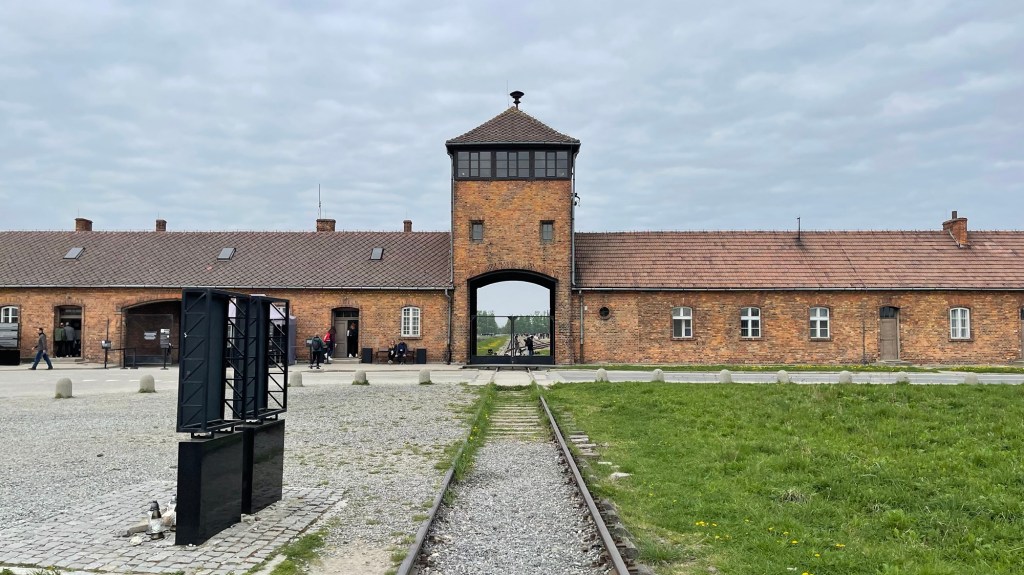
But Poland is more than World War 2 and the holocaust, the countryside is beautiful and there is a long and amazing history. This was seen in Wawel Royal Castle and the Palace of Plawniowice. Amazing places with stunning structures and history.
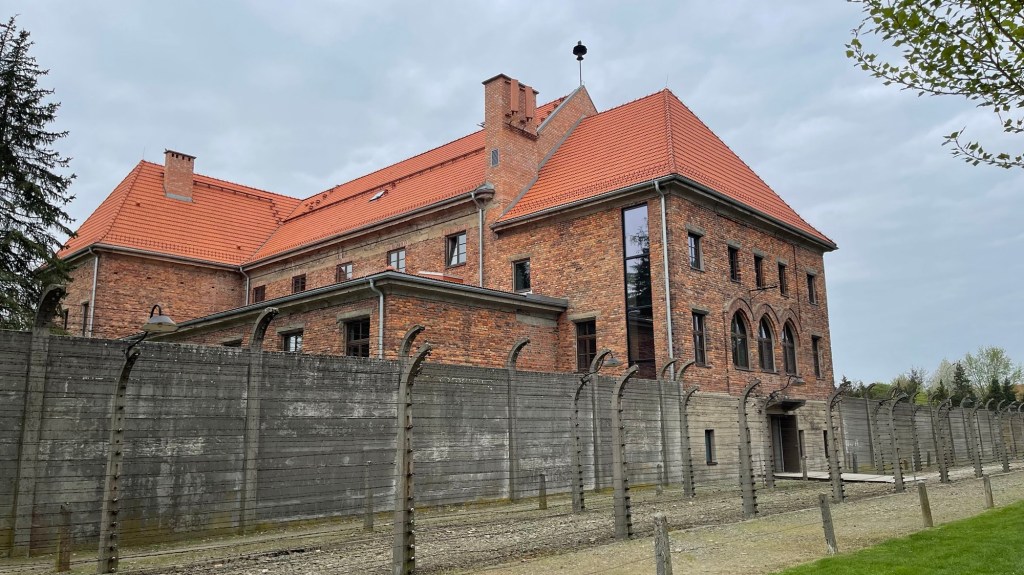
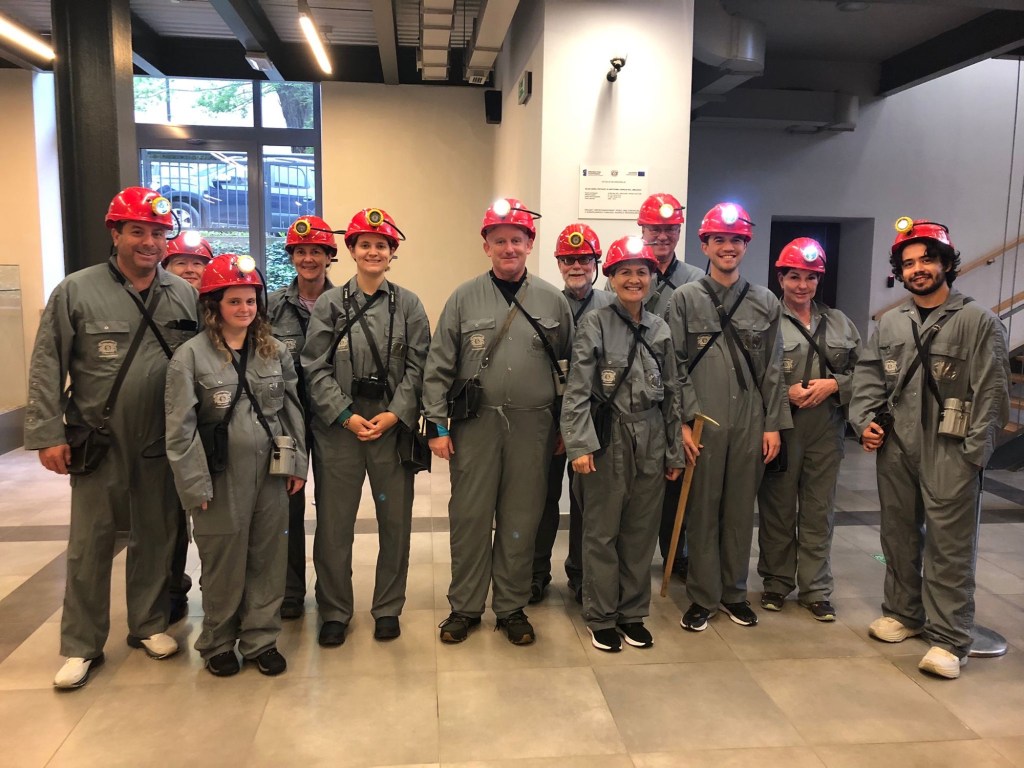
I also had fun educational time exploring the Wieliczka Salt Mine which was also interactive which is a great way to better understand the life of miners.
A beautiful and tragic country that will stay with me for a long time.
<Last Updated 17 May 2024>
 Nathan's Insights
Leave a comment